

Choosing the right Circuit Breaker Distribution Panel affects safety, organization, and future electrical upgrades. A dependable panel should provide enough breaker spaces, clear labeling, strong bus bars, and reliable protection against overloads. It should also fit the installation environment, whether that means a compact workshop, a busy garage, or a residential service room.
Real-world details matter. A panel that looks excellent online may leave little wiring space behind the cover. Tight terminals can slow installation and encourage poor cable routing. Look for durable enclosures, accessible neutral and ground bars, secure covers, and compatibility with approved breakers. Certified products from established manufacturers usually offer better documentation and replacement support. Always verify local electrical requirements and consult a qualified electrician before installation.
Small details matter.
This guide reviews seven highly regarded distribution panels by comparing capacity, construction, installation convenience, protection features, and overall value. Some models suit new construction, while others work better for upgrades or limited spaces. No buying guide is perfect. Product availability, regional standards, and individual load calculations can change the best choice. I may also favor practical access over appearance, because a neat panel is easier to inspect and maintain. Use these recommendations as a careful starting point, not a substitute for professional assessment.
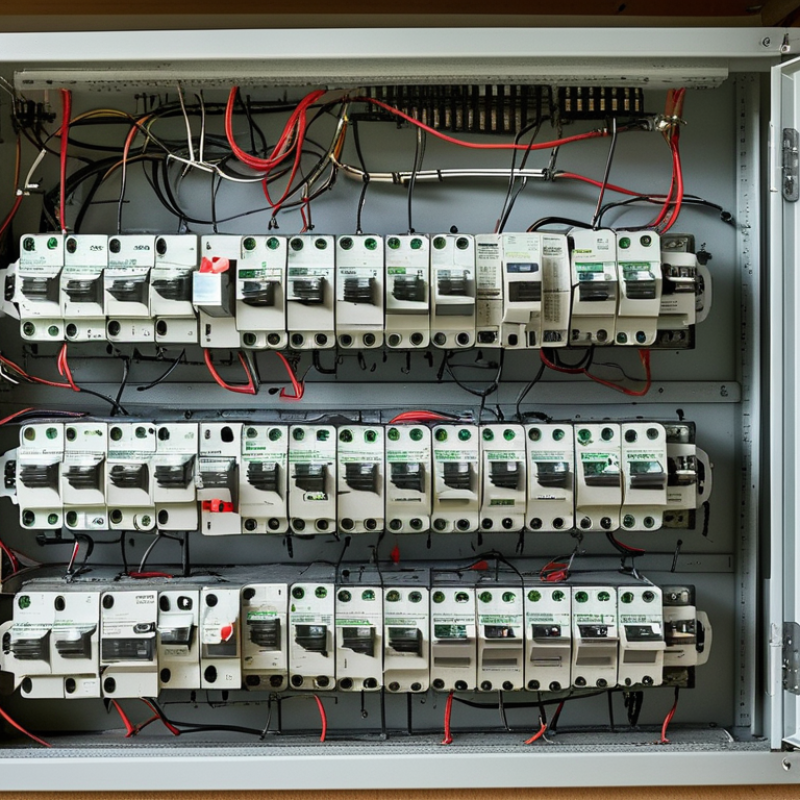
A circuit breaker distribution panel is the electrical system’s control point. It receives power from the main supply and divides it into branch circuits. Each breaker protects wiring from overloads and short circuits. The panel also provides a practical disconnecting point during maintenance or emergencies. It is not just a metal box. Inside, busbars carry current, neutral terminals complete circuits, and grounding paths help limit shock risk.
The NFPA Electrical Fires report estimates that electrical distribution and lighting equipment contributed to about 32,000 U.S. home structure fires annually from 2016 to 2020. These fires caused roughly 470 deaths, 1,100 injuries, and $1.3 billion in direct property damage. Those figures make correct panel sizing more than a shopping detail. A qualified electrician should verify the service rating, available spaces, conductor sizes, fault ratings, and load calculations. Small details matter.
A well-selected panel should support clearly labeled circuits, compatible protective devices, adequate expansion space, and reliable enclosure protection. IEC 61439 emphasizes design verification for low-voltage switchgear assemblies, while local electrical codes govern installation and inspection. A larger panel is not automatically safer. Oversizing can hide poor planning, while an undersized panel may invite crowded wiring and future compromises. I would inspect the bus connections carefully; a clean exterior can still conceal loose terminations or heat damage. Some installation assumptions look reasonable, but they deserve testing.
| Rank | Panel Type | Recommended Use | Typical Voltage | Main Breaker Rating | Available Circuit Capacity | Short-Circuit Rating | Enclosure Rating | Key Advantages | Important Limitations |
|---|---|---|---|---|---|---|---|---|---|
| 1 | Indoor Main-Breaker Load Center | Standard residential service, renovations, and small additions | 120/240 V AC, single-phase | 12–42 circuit spaces; tandem breakers may increase circuit count where permitted | Typically 10 kAIC; verify the rating of the complete breaker assembly | NEMA Type 1 for dry indoor locations | Provides a central disconnect, branch-circuit protection, neutral and grounding termination points, and broad breaker compatibility within the listed system | Not intended for wet or exposed outdoor locations; the service rating must match the calculated electrical load | |
| 2 | Outdoor Main-Breaker Load Center | Exterior service equipment, detached structures, workshops, and outdoor utility areas | 120/240 V AC, single-phase | 12–42 circuit spaces | Typically 10 kAIC; higher ratings are available for specific installations | NEMA Type 3R for rain-resistant outdoor use | Weather-resistant enclosure, outdoor-rated hubs or conduit entries, and convenient service disconnect capability | Must be installed with correctly sealed openings; Type 3R does not mean submersible or suitable for every corrosive environment | |
| 3 | Main-Lug-Only Distribution Panel | Subpanels supplied from an upstream disconnect or main service panel | 120/240 V AC, single-phase | 12–42 circuit spaces | Typically 10 kAIC, subject to the upstream available fault current | NEMA Type 1 indoors or Type 3R outdoors, depending on enclosure | Efficient for distributing power to garages, additions, workshops, and separate building areas without duplicating the service disconnect | Usually does not provide the building's service disconnect; feeder overcurrent protection and a four-wire feeder are required where applicable | |
| 4 | High-Capacity Residential Panel | Large homes, electric heating, heat pumps, workshops, and future circuit expansion | 120/240 V AC, single-phase | 30–60 circuit spaces | Typically 10–22 kAIC, depending on the listed equipment combination | Usually NEMA Type 1 indoors; outdoor versions commonly use NEMA Type 3R | Higher circuit capacity, improved expansion room, and support for multiple large branch loads when the service calculation permits | A larger panel does not increase available utility capacity; service conductors, meter equipment, and load calculations must be properly sized | |
| 5 | Generator-Ready Transfer Panel | Homes and small facilities requiring backup power for selected or essential circuits | 120/240 V AC, single-phase | 12–42 circuit spaces, often with selected-load management | Typically 10 kAIC; confirm ratings for utility and generator sources | NEMA Type 1 indoors or NEMA Type 3R outdoors | Helps transfer designated loads between utility and generator power while reducing the risk of unsafe backfeeding | Generator output must be compatible with the panel; installation requires correct transfer equipment, grounding, bonding, and fuel-system planning | |
| 6 | GFCI and AFCI-Ready Panel | Modern residential installations where ground-fault and arc-fault protection are required | 120/240 V AC, single-phase | 12–42 circuit spaces | Typically 10 kAIC | NEMA Type 1 indoors or NEMA Type 3R outdoors | Supports protective devices for shock protection and arc-fault mitigation, with clear circuit identification and convenient branch-circuit expansion | Protection requirements vary by circuit and local electrical code; compatible breakers and correct neutral connections are essential | |
| 7 | Compact Space-Saving Panel | Small apartments, accessory structures, remodels, and installations with limited wall space | 120/240 V AC, single-phase | 6–24 circuit spaces | Typically 10 kAIC | NEMA Type 1 indoors; select models are available in NEMA Type 3R | Smaller footprint, lower material use, and practical circuit distribution for compact electrical systems | Limited expansion capacity; the available circuit count, conductor size, and breaker type must be checked before installation |
A circuit breaker distribution panel receives electrical power from a utility or other source, divides it into branch circuits, and provides overcurrent protection and a means of disconnecting power. Actual ratings, circuit capacity, enclosure type, and breaker compatibility must be verified against the panel listing, installation instructions, calculated load, available fault current, and local electrical code.