7 Tips for Buying Laminated Safety Glass
A cracked pane can turn a routine drive or a busy entrance into a serious hazard. Laminated Safety Glass combines glass layers with a bonded plastic interlayer, helping hold fragments together when the glass breaks. It is not unbreakable. Its performance depends on construction, installation, and the conditions it faces.
The stakes are real. The World Health Organization’s Global Status Report on Road Safety 2023 estimates 1.19 million road deaths worldwide each year. NHTSA’s Traffic Safety Facts: 2022 Data reports 42,514 U.S. traffic fatalities in 2022. These figures describe road risks; they do not prove that any glazing product prevents injuries. They do, however, underline why buyers should verify claims rather than rely on appearance alone.
The right specification changes with the job. A vehicle windshield, storefront entrance, and interior partition may need different thicknesses, interlayers, edge finishes, and impact ratings. Ask for product test documentation, the intended-use specification, and confirmation that the glass suits local building requirements. Check clarity, heat exposure, sound-control needs, and warranty terms, too. Small details matter. A beautiful sample tells you little about a finished installation. These seven tips will help you compare suppliers, question vague promises, and choose glass that fits the actual opening—not just the brochure. One caution remains: even careful research cannot replace a qualified installer’s site assessment.
Understanding Laminated Safety Glass and Its Construction
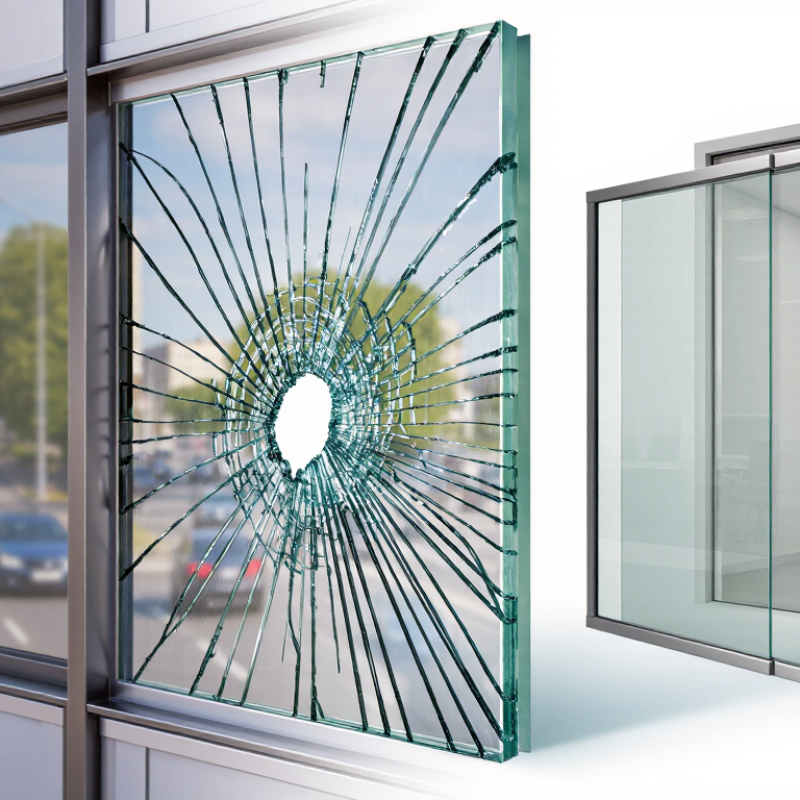
Laminated safety glass is built from two or more glass sheets bonded around a plastic interlayer, commonly polyvinyl butyral (PVB). Heat and pressure help the layers adhere, creating a panel that behaves differently from ordinary monolithic glass. When struck, it may crack into a spiderweb pattern, while many fragments remain attached to the interlayer. The National Glass Association’s technical guidance explains this retention behavior as a key safety feature. The glass can still break, though. That distinction matters when comparing products.
Interlayer thickness, glass type, and total panel makeup affect performance, so check the exact specification rather than relying on the word “laminated.” Industry PVB technical data commonly report blocking up to 99% of ultraviolet radiation, though actual results depend on the interlayer and test method. Ask for the product’s test documentation and applicable impact-safety classification, such as testing under ANSI Z97.1 or CPSC 16 CFR Part 1201. A clear sample can look almost identical to ordinary glass. Small detail, big difference. I would also confirm edge protection and installation requirements; even well-made glass can underperform if moisture reaches exposed edges.
Understanding Laminated Safety Glass Construction
Example nominal thicknesses for laminated glass made with two glass plies and one 0.38 mm PVB interlayer.
The bars show the combined thickness of both glass plies plus the interlayer: 3 + 0.38 + 3 mm = 6.38 mm, 4 + 0.38 + 4 mm = 8.38 mm, and 5 + 0.38 + 5 mm = 10.38 mm. These are illustrative make-ups; available constructions and specifications vary by product and application.
Identifying the Right Glass Type for Your Application
Choosing laminated safety glass starts with the hazard, not the thickness alone. It consists of glass layers bonded by an interlayer, which helps hold fragments after breakage. For doors and storefronts, check impact exposure and the required safety-glazing classification. For overhead glazing, ask the supplier to verify post-breakage retention and compatibility with the support system. Details matter.
Noise, heat, and structural demands may point to different constructions. Acoustic interlayers can help reduce sound transmission, while stiffer interlayers may suit some structural applications; confirm performance through tested assembly data.
The U.S. Department of Energy’s Energy Saver guidance estimates that windows account for 25–30% of residential heating and cooling energy use. That figure covers whole window systems, not laminated glass alone, so compare the frame, coatings, and glazing together.
Specify the intended use, dimensions, support conditions, exposure, and relevant local code requirements before requesting quotes. Ask for test reports covering the complete proposed assembly, not just a glass sample. A detail that is easy to overlook: edge exposure and sealant compatibility can affect durability. I would not assume that thicker glass is automatically safer or quieter; the right choice depends on verified performance for the actual installation.
Checking Safety Standards, Certifications, and Test Ratings
When buying laminated safety glass, check the standard named on its paperwork, not just the phrase “safety glass.” Requirements vary by country and application, such as doors, overhead glazing, or school partitions. Confirm that the cited standard covers your intended use and the exact glass build-up. Details matter.
Tip 1: Ask for the product’s test report or certificate. Check the issuing body, report date, glass thickness, interlayer type, and tested dimensions. A certificate for a similar-looking panel may not apply to yours.
Tip 2: Match the test rating to the hazard. Impact resistance, penetration resistance, and fire performance are different measures; one does not prove the others. Read the rating scale and test conditions, including how the glass was mounted. Small print counts.
Tip 3: Verify traceability. The label or order documents should connect the delivered panels to the tested configuration, and an independent laboratory’s report can help confirm the claim. If information is missing, request it before ordering. I have seen buyers focus on a high rating and overlook the frame, even though installation can affect performance. That’s easy to miss. Ask whether the proposed framing and fixings match the tested assembly, and keep the documents with the project records.
Comparing Thickness, Interlayers, Clarity, and Sound Control
When comparing laminated safety glass, start with the full glass build-up, not thickness alone. Two panes bonded with an interlayer can behave differently from one thicker pane. Match the specification to the opening size, support system, and expected impact risk. Ask for documented test results for the exact assembly. Small details matter.
Interlayers help hold cracked pieces together, but their type and thickness also affect performance. For clearer views, inspect a sample against a straight edge and a bright window. Look closely. Check for haze, bubbles, or waviness, especially near the edges. A small sample may not reveal every visual issue, so request a larger piece when appearance is critical. I would not judge clarity from a photograph.
For sound control, compare tested acoustic ratings rather than relying on glass thickness or the word “laminated.” Performance depends on the panes, interlayer, frame, seals, and installation. Ask which noise range the test addresses; traffic rumble and sharp voices are not the same problem. A heavier build may help, but it is not a guaranteed fix. Confirm that the chosen frame can support the glass and preserve its seals. One trade-off is easy to miss: improving sound performance can change weight, cost, and visible tint. Compare the complete assembly before deciding.
Reviewing Supplier, Installation, Warranty, and Total Cost
When buying laminated safety glass, look beyond the quoted thickness. Ask the supplier for product data showing glass makeup, interlayer type, and test performance. Request a sample, too. A clear edge can reveal uneven layers, trapped air, or inconsistent bonding. Ask how the glass will be packed and transported; damaged edges may create problems before installation even begins.
Installation quality matters as much as the glass itself. Confirm that the installer has handled similar panels and understands the project drawings. Check how the frame supports the glass, where setting blocks will sit, and whether drainage paths remain open. Small details matter. A poorly sized opening can force rushed adjustments on site. No checklist catches every site condition, so allow time to inspect measurements before fabrication.
Read the warranty before comparing prices. Check what it covers, how long coverage lasts, and whether labor or replacement costs are excluded. Then compare total cost, including delivery, lifting equipment, installation, and likely maintenance. The lowest quote may omit necessary hardware or site preparation. Keep the quote. Ask for unclear exclusions in writing, and leave room in the budget for unexpected work.