How to Choose Aluminum Profiles for Solar Panel Frames
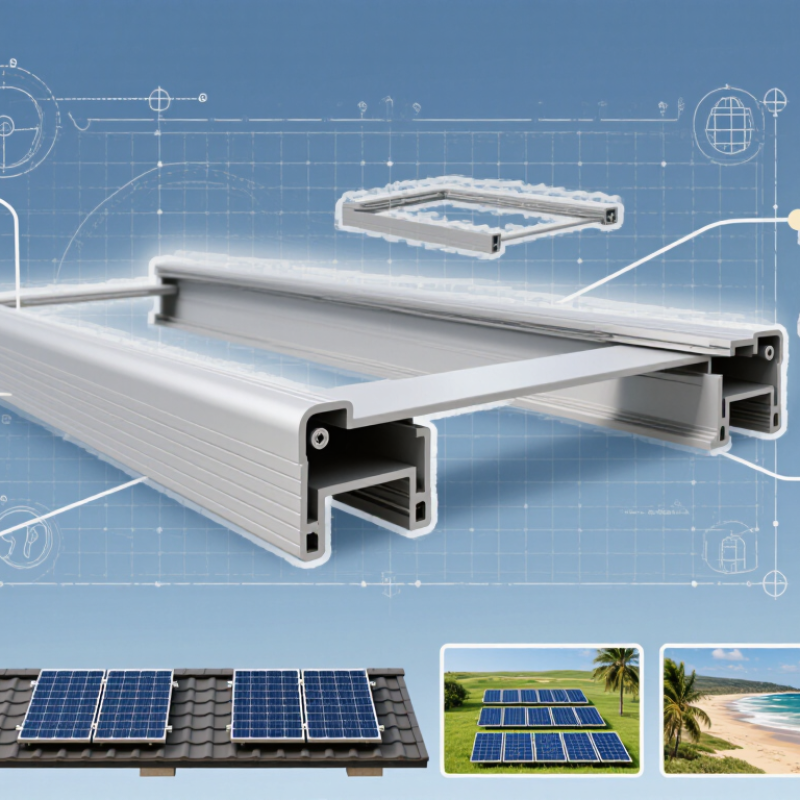
A solar panel frame must do more than hold glass in place. It needs to resist wind and weather, support the module evenly, and remain compatible with the mounting system. Choosing an Aluminum Profile For Solar Panel Frame therefore starts with the project’s actual conditions: panel dimensions, expected loads, installation method, and local climate. A profile that works well on a sheltered rooftop may not suit an exposed site with strong gusts or salty air.
Compare alloy and temper, cross-section shape, wall thickness, and dimensional tolerances against the module maker’s requirements. These choices affect strength, weight, fit, and fabrication. Inspect the corners and joints, too. Poorly matched parts can create gaps, uneven pressure, or assembly delays. Small details matter. A lot.
Surface treatment deserves careful attention. Anodizing or another suitable finish can help protect aluminum, but its performance depends on exposure, processing quality, and maintenance. Check how the frame interacts with fasteners and neighboring metals, since contact can contribute to corrosion in some environments. Ask suppliers for material specifications, inspection records, and relevant test data rather than relying on appearance alone. It is also sensible to verify drainage and thermal movement in the installed design. No profile is perfect for every site. Real conditions can expose assumptions that looked fine on paper. A methodical comparison helps buyers select a frame that is practical to manufacture, install, and maintain over time.
Define the Structural Requirements of the Solar Panel Frame
Define the frame’s structural job before comparing aluminum profiles. Record the panel dimensions, weight, support-point locations, and required span. Include wind pressure, snow load, and any maintenance access expected at the installation site. Conditions vary sharply between an exposed rooftop and a sheltered ground array. Small details matter.
The profile must resist bending without allowing excessive panel movement. Check the expected deflection across the longest unsupported span, not just the profile’s strength rating. A frame that looks rigid on a bench may flex under uplift or uneven snow. Keep the panel’s permitted clamp zones in view, too; placing a support outside them can damage the module. Do not size members from panel weight alone. Wind often governs.
Connections deserve equal attention. Specify how corners, rails, and mounting points transfer loads, and check that fasteners suit the profile wall thickness. Allow for aluminum’s thermal expansion, especially on long rails exposed to daily temperature swings. Drainage openings can reduce trapped water, but poorly placed cuts may weaken a section. A simple load sketch is useful, though it will not replace calculations for unusual spans or severe site conditions. Have a qualified structural professional verify assumptions before production.
Compare Aluminum Alloys and Temper Conditions
For solar panel frames, 6063 and 6061 aluminum alloys are common options, but they serve different priorities. Alloy 6063 extrudes well into slim channels and usually gives a smooth finish. That can help when a frame needs clean corners and consistent gasket contact. Alloy 6061 offers higher strength in many tempers, though intricate shapes may be harder to extrude.
Temper matters as much as alloy. 6063-T5 is widely used for architectural-style extrusions and can suit frame sections with moderate loads. 6063-T6 is typically stronger, but confirm the supplier’s process and published properties rather than assuming every profile reaches the same performance. For heavier supports, 6061-T6 may be worth evaluating. Fit matters. A stronger alloy cannot compensate for a section that flexes too much or leaves poor drainage.
Compare profiles against span, wind and snow loads, fastener pull-out, and installation details. Ask for mechanical-property data tied to the exact alloy, temper, and profile thickness. Then inspect a sample: check corner fit, burrs, and whether the panel sits evenly in its channel. In coastal settings, consider the finish and isolation between aluminum and dissimilar metals. A small caveat: selecting the strongest option can add cost and weight without solving the real design issue. It is easy to overlook that.
Select Profile Shapes and Dimensions for Load Support
Choose a profile by checking the unsupported span, wind pressure, snow load, and module-clamp locations—not by comparing rail height alone. A deeper section can resist bending better, but wall thickness and the shape of its cavities also matter. The Aluminum Design Manual (2020) lists a minimum yield strength of 25 ksi (172 MPa) for 6063-T6 under applicable product conditions. That value describes the alloy, not the capacity of a finished rail. Section geometry, connection details, and alloy temper still need verification. Check the span.
For each proposed profile, compare its moment of inertia and section modulus in the direction of loading. Then calculate deflection and stress for the actual support spacing. ASCE/SEI 7-22 provides the framework for determining site-specific wind and snow loads; a coastal roof and a sheltered inland site should not share assumed loads. Ask the supplier for section properties and confirm them against the exact extrusion drawing. A 2-metre rail may look stout on a bench yet flex noticeably between widely spaced supports. Clamps can also create local stresses near thin walls. Small detail, big effect. I would not select a dimension from a generic table alone: project spans, edge zones, and installation tolerances can change the result. Have the final profile checked against the project load cases.
Evaluate Corrosion Resistance and Component Compatibility
Aluminum profiles for solar panel frames must withstand rain, condensation, and airborne salts. Corrosion resistance depends on the alloy, surface treatment, and installation environment. Near the coast, salt can collect inside joints and around cut ends. A durable anodized or coated finish helps, but damaged areas still need attention. Check that the supplier documents the finish thickness and suitability for outdoor exposure. Looks are not enough.
Compatibility matters just as much. Confirm that profile channels match the panel thickness, clamps, and corner connectors. Check fastener materials, too. Stainless steel touching aluminum can encourage galvanic corrosion when moisture is present, so compatible hardware or suitable isolation washers may help. Leave room for thermal movement, and make sure drainage paths are not blocked by seals or brackets. A tight fit can feel reassuring, yet it may trap water. It is easy to overvalue a neat finish and overlook the joint details.
Tips: Inspect cut edges and connection points before assembly. Test-fit a sample panel, clamp, and connector. Ask how the finish performs after cutting, not only on untouched profiles. If site conditions are unusual, verify the choice with a qualified materials specialist.
Verify Manufacturing Quality and Applicable Standards
For solar panel frames, verify how profiles are made, not just how neatly they look on a sample rack. Ask for the alloy and temper designation, dimensional tolerances, and material test records for the production lot. Check that wall thickness stays consistent along the extrusion; a thin corner can weaken a clamped joint. Small details matter. Request evidence of process controls for cutting, drilling, and finishing, plus inspection records showing how defects are handled. A glossy sample can be persuasive, but appearance alone is a weak basis for selection.
Confirm that quality claims refer to recognized, applicable standards. ISO 9001 certification can indicate a documented quality-management system, but it does not prove that every profile meets your project’s design requirements. Likewise, IEC 61215 and IEC 61730 address photovoltaic module performance and safety, not aluminum profile quality itself. Ask the supplier to clarify which tests apply to the profile, coating, and assembled frame. For anodized finishes, check whether testing follows a relevant anodizing standard, and request coating-thickness and corrosion-test results. Compare reports with the actual alloy, finish, and production lot. Not always. Paperwork can be outdated or vague, so verify dates, sample identification, and test conditions before relying on it.
How to Choose Aluminum Profiles for Solar Panel Frames: Verify Manufacturing Quality and Applicable Standards
Representative minimum tensile and yield strength benchmarks for 6063 aluminum profiles by temper.
Reference: ASTM B221/B221M. Values shown are representative minimums; requirements can vary with product dimensions and the applicable standard edition. Check the relevant standard table and mill test certificate for the exact profile, alloy, and temper before approval.