What is a CNC Lathe Machine and How Does It Work?
Cnc Lathe Machines have revolutionized the manufacturing industry. They are vital in precision machining for metal and plastic parts. A report by MarketsandMarkets states that the CNC machine market is expected to reach $100 billion by 2026, highlighting the growing reliance on automation.
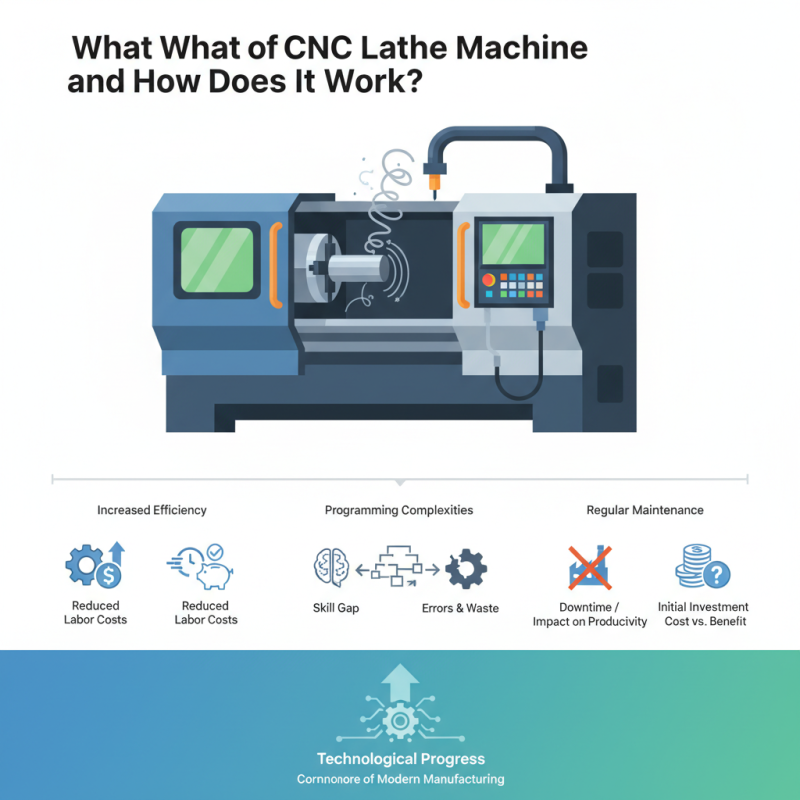
The CNC lathe machine allows for high-speed, automated cutting and shaping. This leads to increased efficiency and reduced labor costs. However, the complexities of programming these machines can pose challenges. Not every operator is equipped with the necessary skills, which can lead to errors and waste.
Moreover, while CNC lathes boost production, they require regular maintenance. Downtime for repairs can impact productivity. The initial investment can be daunting for smaller businesses, questioning the balance between cost and benefit. Nonetheless, as technology progresses, the CNC lathe machine remains a cornerstone of modern manufacturing.
What is a CNC Lathe Machine?
A CNC lathe machine is a precise tool used in manufacturing. It automates the process of shaping and machining materials. The machine operates by rotating a workpiece against a cutting tool. This rotation creates a variety of shapes, including cylindrical and conical forms. According to industry reports, CNC lathe machines have improved production times by up to 50% compared to manual lathes.
CNC stands for Computer Numerical Control. This system uses software to dictate the movements of the tool. Operators input designs, and the machine follows them with high accuracy. Data shows that these machines can achieve tolerances of ±0.01 mm. However, the complexity of programming can lead to errors. Many operators face challenges in translating designs into machine code. This can result in wasted materials and time.
One significant advantage is consistency in production. A CNC lathe can produce thousands of identical parts. This level of automation reduces human errors. Yet, maintaining the machine can be demanding. Regular calibration and troubleshooting are essential for optimal performance. In many cases, operators report difficulties in keeping up with maintenance schedules. This inconsistency can impact overall efficiency and productivity.
Key Components of a CNC Lathe Machine
CNC lathe machines are essential tools in modern manufacturing. They automate the process of machining parts with high precision. The main components of a CNC lathe include the spindle, tool holder, and control panel.
The spindle is the heart of the lathe. It holds the workpiece and rotates it at varying speeds. This allows for different cutting techniques. A powerful spindle can lead to greater efficiency. However, users must monitor the spindle speed to avoid overheating, which can damage both the tool and the workpiece.
The tool holder securely mounts the cutting tools. It helps maintain the correct angle and depth for cutting operations. A well-designed tool holder can enhance tool life and improve part accuracy. Many users overlook the importance of tool holder maintenance. Regular checks can prevent unexpected breakdowns.
The control panel provides the user interface. It allows operators to input designs and monitor the machining process. A user-friendly panel reduces errors, but many find it complex initially. Training is essential for maximizing machine capabilities.
Tips: Regular software updates are crucial for optimal performance. Always back up your CNC programs. Keeping a clean workspace can also enhance machining accuracy. Pay attention to tool wear to avoid mistakes.
How a CNC Lathe Machine Operates
A CNC lathe machine is a powerful tool used for shaping materials. It spins the workpiece while a stationary tool cuts and carves it into the desired shape. This machine specializes in producing cylindrical parts, including shafts and bolts, with high precision.
When operating a CNC lathe, design software creates a program detailing the tool movements. This program is then uploaded to the machine. The CNC controller translates these instructions into actual movements. The cutting tool is positioned accurately to achieve the intended design. Even small errors in programming can lead to significant flaws in the final product. Operators must be attentive.
The process is fascinating but not without challenges. Continuous monitoring is crucial. If the tool wears out, it can create inaccuracies. Adjustments may be necessary during production to maintain quality. This machine requires skill and patience. Despite its capabilities, human oversight remains essential to ensure optimal results.
Common Applications of CNC Lathe Machines
CNC lathe machines are prominent in various industries. They excel in turning raw materials into precise components. According to industry reports, the global CNC lathe market was valued at around $2 billion in 2022, with an expected growth rate of 5.5% annually. This uptick reflects the growing demand for precision engineering in sectors like automotive and aerospace.
Common applications include producing shafts, gears, and other cylindrical parts. For example, in the automotive sector, a CNC lathe can create engine components with tight tolerances. This capability enhances machine efficiency, leading to reduced waste and cost savings. However, the skill gap in operating these machines remains a challenge. Many shops struggle to find qualified personnel trained in CNC technology.
Another significant application is in medical device manufacturing. CNC lathes help craft intricate parts for surgical instruments. Precision is critical in this field, yet, some manufacturers face quality control issues. They may deal with unexpected variability in materials or machine calibration. Such challenges highlight the need for continuous improvement in processes and training programs to maintain standards.
Advantages of Using CNC Lathe Technology
CNC lathe technology offers numerous advantages for precision machining. One significant benefit is the high level of accuracy. CNC lathes can produce intricate designs that manual lathes struggle to replicate. This precision reduces material waste and saves production costs.
Another advantage is efficiency. CNC lathes operate continuously, allowing for longer production runs without breaks. This can lead to faster turnaround times. Operators can also program the machine to produce multiple parts in one go. This can streamline the manufacturing process significantly.
**Tip:** Always ensure the machine is calibrated correctly. Regular checks can prevent costly errors and maintain quality.
Despite these benefits, there are challenges. It requires skilled operators to code and manage these machines effectively. Mistakes in programming can lead to wasted materials or faulty products.
**Tip:** Continuous training for operators can mitigate risks. Investing in skill development pays off in the long run.
Using CNC lathe technology also opens up possibilities for complex designs. It allows for the creation of parts that would be hard to achieve manually. This versatility helps industries innovate and meet varying customer demands.
What is a CNC Lathe Machine and How Does It Work? - Advantages of Using CNC Lathe Technology
| Feature | Description | Advantages |
| CNC Control | Computer Numerical Control that automates machining processes. | Increased precision and reduced human error. |
| Tooling Flexibility | Ability to use various tools for different machining tasks. | Versatile for complex shapes and designs. |
| Speed | Rapid execution of machining tasks through automated systems. | Increased production rates and efficiency. |
| Repeatability | Consistent results on multiple pieces. | High-quality output in mass production. |
| Software Integration | Seamlessly integrates with CAD/CAM software. | Streamlined workflow from design to production. |
| Material Compatibility | Can work with a wide range of materials including metals and plastics. | Adaptable for various industries and applications. |