What Is a Dismantling Joint and How Does It Work?
Every reliable water network depends on small components that rarely receive public attention. A Dismantling Joint is one of them. It connects flanged pipes while allowing controlled axial movement during installation, maintenance, or valve replacement. Its threaded or flanged adjustment mechanism can separate equipment without cutting the pipeline. That practical function matters beneath roads, treatment plants, and industrial floors.
The World Health Organization and UNICEF reported that 2.2 billion people lacked safely managed drinking water services in 2022. This figure exposes a wider challenge: water infrastructure must remain serviceable, not merely installed. The American Society of Civil Engineers rated America’s drinking water infrastructure at C-minus in its 2021 Infrastructure Report Card. Aging pipes, restricted access, and unplanned shutdowns can turn a minor repair into a disruptive excavation.
Water expert Peter Gleick has described water as “the lifeblood of the planet.” His observation gives this mechanical component a larger context. A Dismantling Joint protects continuity around critical assets, including pumps, gate valves, meters, and non-return valves. Installers can adjust the joint’s length, align flanges, and remove equipment with fewer structural changes. The exact benefit depends on correct sizing, bolt tightening, gasket selection, and restrained-pipe design.
It is not maintenance-proof.
Designers should check pressure ratings, movement limits, corrosion exposure, and manufacturer instructions. Standards such as AWWA C219 can support specification decisions, but site conditions still demand engineering judgment. A joint may look simple. Its failure consequences are not. Even strong products perform poorly when alignment, torque, or support details are overlooked. This article explains what a Dismantling Joint is, how it works, and where its limitations deserve closer attention.
Definition and Pipeline Role of a Dismantling Joint
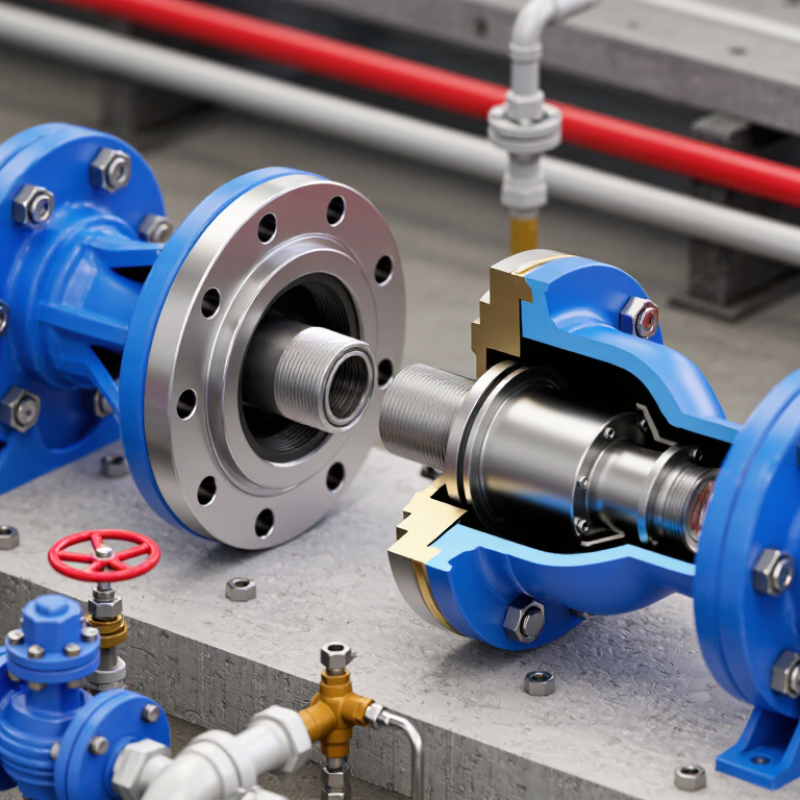
A dismantling joint is a flanged pipe fitting that allows controlled separation between connected pipeline components. It usually includes a central flange body, sealing gasket, adjustable flange, and tie rods. During installation, technicians set the joint to match the pipe gap. After tightening, the tie rods maintain the required length and alignment.
Its pipeline role is practical, not decorative. It creates working space around valves, pumps, flow meters, and other heavy fittings. When maintenance begins, engineers can loosen the joint and withdraw the component without cutting the pipe. This reduces downtime and limits damage to nearby coatings.
The joint must also resist internal pressure and external loads. However, it should not be treated as a universal expansion device. Pressure thrust still requires suitable anchors, restraints, or structural support.
The need for maintainable networks is growing. The U.S. Environmental Protection Agency’s 2023 Drinking Water Infrastructure Needs Survey estimated $625 billion in investment needs over 20 years. The WHO and UNICEF Joint Monitoring Programme reported that 2.2 billion people lacked safely managed drinking water in 2022. These figures do not measure dismantling joints directly, but they show why repair-ready pipeline design matters. A practical inspection lesson is often overlooked: incorrect tie-rod adjustment can create flange stress or leakage. Small errors matter. Designers should verify bolt loads, gasket compatibility, pipe alignment, and access clearance before commissioning. Industry standards help, but site conditions still demand judgment.
Site Installation: Aligning Flanges Within a Typical 50 mm Adjustment Range
What Is a Dismantling Joint and How Does It Work?
A dismantling joint connects flanged pipes while allowing controlled length adjustment during installation. Its main value appears when pipe ends do not meet perfectly. A typical unit provides about 50 mm of axial adjustment, depending on the design and pipe diameter. That range can absorb small construction errors without forcing the flange, valve, or pump into position.
Measure twice. Keep it square.
Before tightening, installers should clean both flange faces and inspect the gasket seating area. The pipe should be supported independently, so the joint does not carry unexpected bending loads. Workers then loosen the tie rods, position the joint within its adjustment range, and bring the flanges together evenly. A steel rule or laser level helps check the gap around the circumference. Uneven gaps often signal pipe misalignment, not a gasket problem.
Torque matters, but sequence matters more. Bolts should be tightened in a diagonal pattern, using calibrated equipment and the project specification. The U.S. EPA’s 2023 7th Drinking Water Infrastructure Needs Survey and Assessment estimated a 20-year drinking water infrastructure need of about 625 billion dollars. That figure shows why maintainable connections matter. A joint that saves hours during valve replacement can reduce shutdown exposure and labor pressure. Still, 50 mm is not permission to pull a pipe into place. That shortcut may work once, but it can transfer stress into nearby supports. The installation may look acceptable today. It may not remain so after pressure cycles.
Operating Principle: Sealing, Axial Movement, and Load Transfer in Service
What Is a Dismantling Joint and How Does It Work?
Operating Principle: Sealing, Axial Movement, and Load Transfer in Service
A dismantling joint connects flanged pipe sections while allowing controlled axial adjustment. Its central body usually includes a flange, sealing gasket, telescopic sleeve, and restraint components. During installation, the sleeve moves along the pipe axis. This movement creates space for valve replacement, pump removal, or flange alignment. It is practical, not unlimited.
The gasket seals when the flanges compress it evenly around the pipe bore. Correct bolt tightening produces contact pressure across the gasket surface. Poor alignment can create a narrow leak path on one side. Field technicians should check flange faces, gasket position, and bolt sequence before pressurizing the line. Small installation errors matter.
Internal pressure creates axial thrust at changes in diameter, closed ends, and connected equipment. Tie rods or other restraint members transfer this force through the joint and into the surrounding pipeline system. The joint must resist service loads without losing gasket compression. However, it should not be treated automatically as a thermal expansion joint. Allowable movement, pressure, temperature, and load capacity depend on the design. A common mistake is assuming every dismantling joint performs identically. Site conditions may prove otherwise. Regular inspection should look for corrosion, displaced bolts, gasket seepage, and unusual sleeve movement.
Safe Removal: Releasing Tie-Rod Restraint Without Cutting the Pipeline
What Is a Dismantling Joint and How Does It Work?
A dismantling joint connects flanged pipes, valves, and other equipment. Its telescopic body allows controlled length adjustment during installation or removal. Tie rods hold the assembly together and resist pressure-related movement. They do not replace proper pipe supports or thrust restraint. That distinction matters.
Safe removal begins with isolation, depressurization, and drainage. A pressure gauge reading is not enough. Technicians should verify zero pressure through an approved vent or drain point. The pipeline must also be supported before any tie-rod nut is loosened. Otherwise, the joint may shift suddenly, even when the pipe appears stable. It can move.
After checking alignment, crews mark the original flange position and measure the joint gap. They loosen tie-rod nuts gradually, using a crosswise pattern. This releases stored restraint more evenly. The joint can then be retracted slightly, creating working clearance without cutting the pipeline. Lifting equipment should support heavy valves or pipe sections during this step. Never rely on the tie rods as lifting points unless the design specifically allows it.
The process sounds simple, but site conditions often complicate it. Corrosion can hide damaged threads, and trapped liquid may remain inside a low section. A careful inspection may reveal problems before removal begins. The joint should be examined for distorted flanges, bent rods, and damaged seals. If the measured gap differs greatly from installation records, stop and reassess the pipe supports, alignment, and restraint calculations. Mistakes here are quiet at first, then expensive.
How a Dismantling Joint Controls Pipeline Thrust
A dismantling joint uses adjustable tie rods to restrain axial forces while allowing a flanged pipeline section, valve, or fitting to be safely removed without cutting the pipe. The chart shows the theoretical pressure thrust for a 300 mm internal pipe diameter at different operating pressures, calculated using F = P × A.
Values are calculated engineering examples for a closed pipe end and exclude friction, fittings, temperature effects, and other installation factors. Final tie-rod sizing and removal procedures must be verified by a qualified engineer.