
Who Are the Top Steel Girder Fabrication Companies in China?

China’s steel capacity is immense, but capacity alone does not identify a reliable girder fabricator. World Steel Association data records 1,005.1 million tonnes of crude steel production in China in 2023 (worldsteel, World Steel in Figures 2024). That figure explains the scale of the supply base. It does not prove that any company can deliver accurate, traceable bridge girders on schedule.

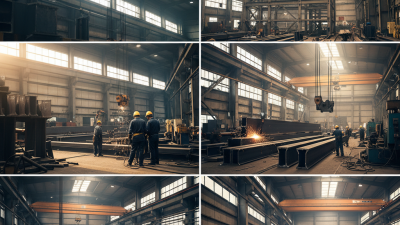
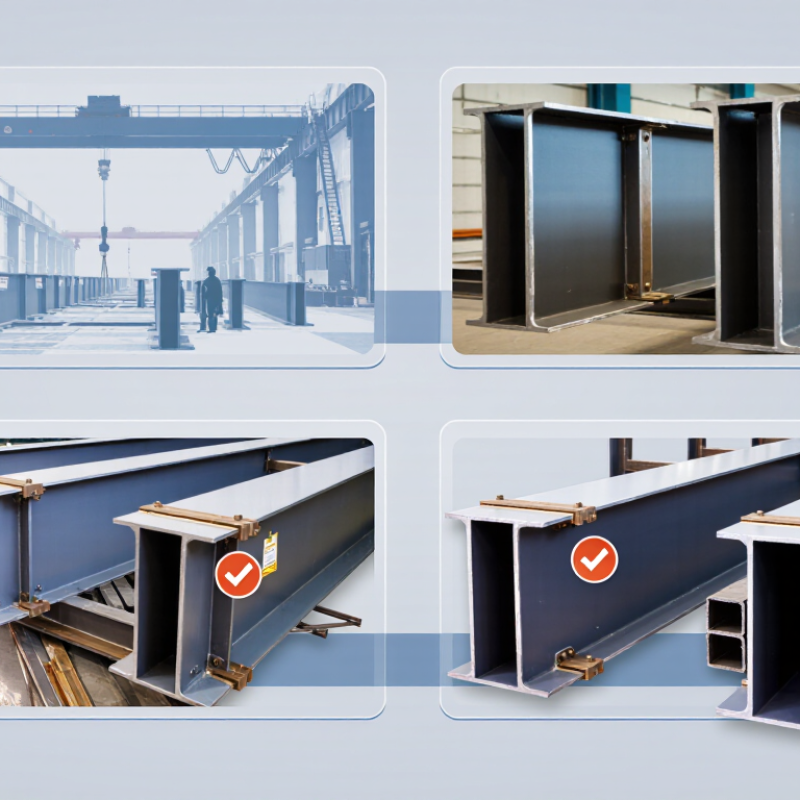
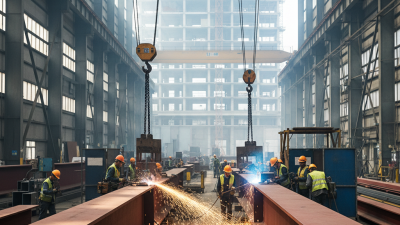
For buyers comparing steel girder fabrication companies, the meaningful evidence is more specific: documented quality systems, welding procedures, dimensional inspection records, coating controls, and completed projects with comparable spans and loads. Look for close-up evidence, too: fit-up checks at a web-to-flange joint, weld inspection reports, and clear traceability from steel certificates to finished members. These details matter more than broad claims about factory size. They still need independent verification.

Worldsteel Director General Edwin Basson has emphasized steel’s need to reduce emissions; paraphrased, his message is that how steel is produced matters as much as how widely it is used. This is a paraphrase, not a verbatim quotation. It also reminds readers to ask suppliers for evidence behind environmental claims. The overview below compares leading Chinese manufacturers through practical indicators, not rankings alone. Public company information can be incomplete, and project credentials may not be directly comparable. Treat each shortlist as a starting point, then verify the details against your own drawings, inspection requirements, and delivery conditions.
Who Are the Top Steel Girder Fabrication Companies in China?

Steel Girder Fabrication in China: Products, Applications, and Market Scope

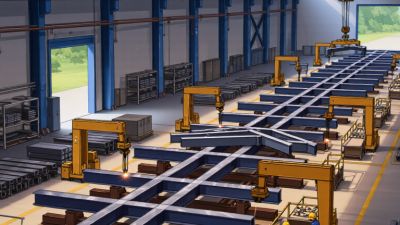
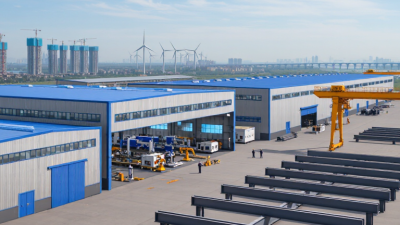
Steel girder fabrication in China spans standard beams and project-specific welded plate girders. Fabricators may produce box girders, bridge segments, and heavy structural members. Cutting, fit-up, welding, drilling, and coating can be coordinated within one production workflow. These products serve highway and rail bridges, industrial buildings, ports, and energy facilities. The required span, load, transport route, and site conditions shape each design.

The market includes workshops for routine structural orders and larger facilities equipped for oversized components. A company’s suitability depends on more than its production capacity. Review sample drawings, material traceability, welding procedures, inspection records, and dimensional reports. Ask how the team controls distortion on long girders; a small deviation can complicate site assembly. Capacity figures alone can be misleading. I would also compare coating specifications, delivery planning, and communication during design changes. Sometimes the clearest answer is a detailed inspection plan, not a sales claim.

Tips: Share interface dimensions and lifting limits early. Request a trial fit or measurement report for critical connections. Confirm who handles packing and transport coordination. On paper, a girder may look straightforward; installation can reveal what the drawings missed.
China’s Steel Supply Context for Girder Fabrication

Annual crude steel production in China, 2020–2024 (million tonnes)

China’s large steelmaking base provides important upstream context for steel girder fabrication across bridge, building, and infrastructure projects. Crude steel production is an industry-wide measure, not a measure of girder output or company rankings.

Source: World Steel Association, annual crude steel production statistics.

How to Identify Top Fabricators: Capacity, Certifications, and Quality Control

Choosing a steel girder fabricator in China starts with evidence, not impressive brochures. Ask about usable workshop space, crane capacity, monthly output, and current workload. Compare these figures with your girder dimensions and delivery schedule. A large plant can still fall behind if its cranes or skilled crews are already committed. Numbers matter.

Check that certificates are current and cover the relevant fabrication processes, rather than assuming a certificate guarantees every project’s quality. Ask how material grades are verified and linked to each girder. During production, inspectors should record weld procedures, dimensions, and any required nondestructive testing. Look closer. Sample inspection reports can show whether checks happened at defined stages or were merely documented at the end.

A site visit can reveal details a spreadsheet misses: marked steel sections, calibrated measuring tools, and clear separation between completed and unfinished work. Ask how the team handles drawing revisions and nonconforming welds. Even a strong quality system can fail when an urgent change is poorly communicated. No checklist catches everything; independent review of key records may still be worthwhile.

Who Are the Top Steel Girder Fabrication Companies in China? — How to Identify Top Fabricators: Capacity, Certifications, and Quality Control

Use this evidence-based checklist to compare fabricators without relying on unverified rankings. Request project-specific records and confirm that certificates and approvals apply to the facility and work being evaluated.

Evaluation Dimension Evidence to Request What a Strong Submission Shows Comparison Data to Record
Production capacity Facility list; current production schedule; equipment inventory; recent output records for comparable girders. Capacity is stated by facility, product type, and time period, with supporting records. Available capacity is distinguished from theoretical or nameplate capacity. Verified output per month; available capacity; number of shifts; delivery lead time.
Girder size and handling Shop drawings and completed-project records showing maximum fabricated dimensions and weights; crane and transport arrangements. Documented experience covers the required span components, plate thicknesses, assembly size, lifting limits, and shipping constraints. Maximum verified piece length, width, height, and weight; permitted transport envelope.
Quality management Valid quality-management certificate, certificate scope, issuing body, facility address, and recent audit status. A verifiable ISO 9001:2015 quality-management-system certificate, where required, with a scope relevant to steel fabrication and the proposed production site. Standard and edition; certificate scope; issuing body; expiry date; covered facility.
Welding capability Welding procedure specifications and qualification records; welder qualifications; welding coordination and inspection procedures. Qualified procedures and personnel match the materials, joint details, positions, and governing project code. ISO 3834 certification may be relevant when specified by the contract. Applicable welding code; qualified processes and ranges; personnel qualification validity; certificate scope, if applicable.
Chinese project compliance Project quality plan, inspection and test plan, applicable code list, and sample inspection records. For applicable Chinese construction projects, the fabricator demonstrates how work and acceptance records address GB 50205-2020 and welding requirements under GB 50661-2011, as specified by the project. Applicable standards and editions; inspection hold points; acceptance criteria; approved deviations.
Material traceability Material certificates, heat-number transfer records, receiving inspection reports, and traceability samples for finished components. Material grades and heats can be traced from incoming stock to the completed girder and its inspection dossier. Traceability coverage; material-standard compliance; missing or unresolved records.
Inspection and testing Dimensional inspection reports, weld inspection records, non-destructive testing reports, calibration records, and corrective-action logs. Inspection methods, personnel qualifications, acceptance criteria, and test coverage are defined by the contract and applicable code; nonconformities are documented and closed. Inspection coverage; rejection and repair records; calibration status; open nonconformities.
Coating and corrosion protection Surface-preparation records; coating product data; environmental logs; dry-film-thickness readings; repair procedures. Preparation grade, coating system, application conditions, and inspection criteria match the project specification and service environment. Specified coating system; measured thickness; inspection results; repair status.
Delivery and project record Comparable project references, delivery records, packing plans, shipping documents, and final manufacturing dossiers. References are relevant in girder type and scale; the fabricator can show delivery performance and provide complete records for the finished work. On-time delivery record; comparable projects; dossier completeness; shipping method.

Note: Standards and certification requirements depend on the project jurisdiction, contract, and design specification. Verify current editions and certificate validity with the issuing organization; do not treat a certificate alone as proof of project-specific capability.

Leading Chinese Companies: Specialties, Project Records, and Market Position

China’s steel girder fabricators differ more by capability than by size. Some specialize in bridge girders, producing curved box sections, long-span trusses, or fatigue-sensitive components. Others focus on industrial buildings and transport infrastructure, where repeatable production and tight delivery windows matter. Shop capacity helps, but it is not the whole story.

Project records offer a clearer measure. Look for documented girder dimensions, steel grades, completed tonnage, and delivery dates. Strong records also describe welding procedures, non-destructive testing, dimensional checks, and how sections were assembled on site.

Ask for owner references or inspection records where available. A polished project photo proves little. Details matter.

Market position reflects access to skilled welders, plate-processing equipment, engineering support, and reliable logistics. Large facilities can handle demanding packages, while smaller specialists may offer closer coordination or greater flexibility. Regional access to ports and construction corridors can also affect transport costs and schedules.

A ranking can mislead. Public information may omit delays, rework, or subcontracted operations, so buyers should verify claims against project documents and factory audits.

Industry Context: China Produced 1.019 Billion Tonnes of Crude Steel in 2023

China produced 1.019 billion tonnes of crude steel in 2023, according to the World Steel Association’s World Steel in Figures 2024. The National Bureau of Statistics also reported 1.362 billion tonnes of finished steel products that year. These figures show the scale of China’s steel supply chain. They do not reveal how much steel became structural girders, or how consistently individual workshops fabricated them.

Scale is not quality. A bridge or industrial project depends on more than abundant steel: plate traceability, weld inspection, dimensional tolerances, and documented quality controls matter on the shop floor. The national totals can also hide uneven capabilities between suppliers. That distinction is easy to overlook when comparing companies by capacity alone.

Tips: When assessing a girder fabricator, ask for recent inspection records, material certificates, and examples of comparable projects. Check how the supplier controls welds and verifies camber and dimensions before shipment. A polished capacity figure is useful, but it cannot replace project-specific evidence.

How Buyers Compare Suppliers: Standards, Welding, Coatings, and Delivery Times

Comparing steel girder fabricators in China starts with the project specification, not a sales ranking. Ask whether the supplier can meet applicable GB, EN, or AWS requirements, and clarify which edition governs. A certificate alone is not enough. Request sample inspection records, material traceability documents, and approved shop drawings. These show how requirements reach the workshop floor.

Welding deserves close review because small fit-up errors can become costly at the site. Check the welding procedure, welder qualification records, and inspection plan before production begins. For critical joints, ask how visual checks, ultrasonic testing, or magnetic-particle testing are selected and recorded. Do not assume every seam needs the same test. That assumption can waste time. Ask how defects are repaired and re-inspected; a useful report should explain both.

Coating and delivery often expose gaps between a quotation and reality. Confirm the surface preparation grade, coating system, dry-film thickness, and measurement method. Request readings from several girder areas, including edges and stiffeners. Compare the production schedule with milestones for drawing approval, trial assembly, coating, and loading. Clarify packing, lifting points, and transport limits. Weather, port congestion, or late design changes can shift dates. I would still ask for buffer time; plans look precise until they meet a wet week.

Request a Quote