What Is a Computer Multi Needle Quilting Machine?

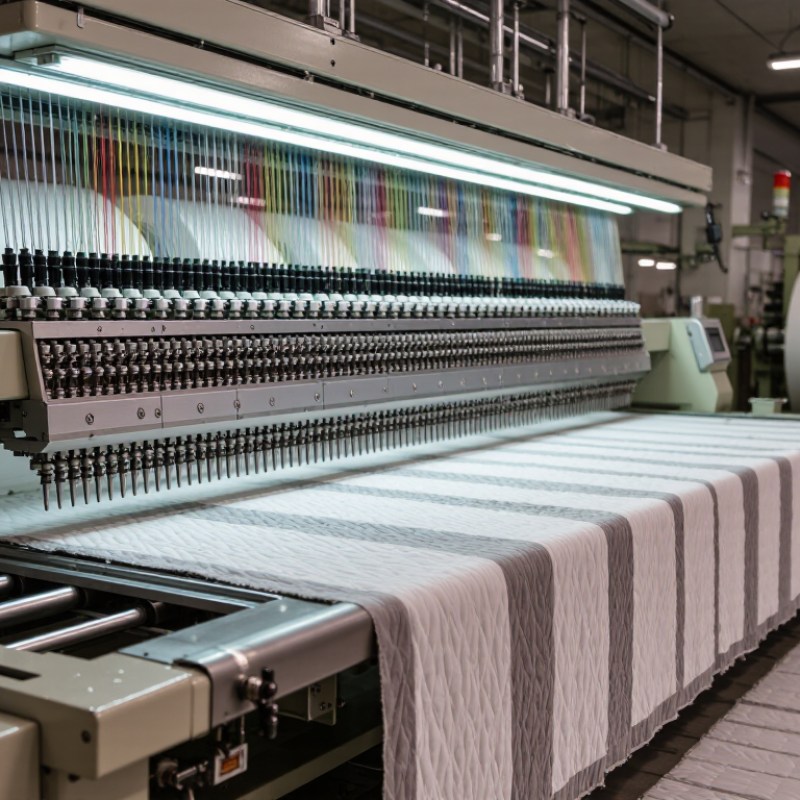
A Computer Multi-needle Quilting Machine is an industrial quilting system that uses several needle heads to stitch layered materials at the same time. It combines computerized pattern control with coordinated rollers, thread tension settings, and fabric feeding. Unlike a domestic quilting machine, it can produce repeated designs across mattresses, bedspreads, comforters, automotive textiles, and protective padding. The operator selects a digital pattern, adjusts stitch length, and checks the first panel before full production begins.

Demand for efficient textile equipment is closely connected with expanding home-textile and technical-textile production. Grand View Research has reported continued growth in the global home-textiles market, driven by bedding, furnishing, and replacement demand. The International Textile Machinery Federation also tracks ongoing investment in automated textile machinery, reflecting manufacturers’ need for higher productivity and consistent quality. These reports do not measure every quilting-machine installation, however. That limitation matters.

In practical use, a Computer Multi-needle Quilting Machine can keep parallel needle lines evenly spaced across a wide fabric roll. A sensor may detect uneven feeding, while software stores patterns for repeat orders. Production speed alone should not define performance. Thread breakage, skipped stitches, noise, maintenance access, and operator training affect real output. Small details matter.

The term is not perfectly standardized across suppliers. Some machines use computerized multi-head systems, while others use CNC-controlled quilting frames. Buyers should compare working width, needle configuration, stitch accuracy, compatible fabrics, software support, and service availability. Manufacturer claims require testing. A factory trial often reveals more than a brochure.

This guide explains the machine’s structure, operating process, applications, advantages, limitations, and selection criteria. It focuses on practical evidence rather than impressive specifications.

What Is a Computer Multi Needle Quilting Machine?

Definition and Purpose of a Computer Multi-Needle Quilting Machine

What Is a Computer Multi Needle Quilting Machine?

A computer multi-needle quilting machine is an automated textile system that joins fabric layers with batting and backing. Several needles work across the quilt width at the same time. A computerized controller manages stitch patterns, needle timing, spacing, and fabric movement. Operators can load a digital design, set the quilting depth, and monitor the sewing path through a screen.

Its main purpose is consistency. A programmed pattern can create evenly spaced waves, grids, or floral shapes across large panels. In a production room, the machine reduces repeated manual adjustments and supports faster work.

The International Textile Machinery Federation reports continuing global investment in automated textile equipment, reflecting demand for higher productivity and stable quality.

Yet speed is not everything. Poor fabric tension can still cause puckering, skipped stitches, or uneven edges.

The wider material challenge is significant. Textile Exchange reported that global fiber production reached about 124 million metric tonnes in 2023 and could rise to 160 million tonnes by 2030.

Precise quilting may help reduce rework and unnecessary material use, although the result depends on setup and operator skill. A practical test begins with a small fabric sample. Check the needle size, thread tension, stitch density, and batting thickness.

The machine is advanced, but not self-correcting. A perfect digital pattern can still look wrong on soft, shifting fabric.

How the Computerized Quilting Process Works

A computer multi needle quilting machine combines several needles with programmed fabric movement. It can stitch repeated patterns across quilts, mattress panels, and padded textiles. Unlike a manual setup, the computerized process controls needle timing, stitch spacing, and carriage movement. An operator first selects or creates a digital pattern. The software then converts that design into coordinated machine commands. Small details matter.

The operator places the fabric layers carefully on the frame. The system may use sensors to monitor position, speed, and thread behavior. Each needle forms stitches while the fabric advances under controlled movement. Multi needle operation improves production consistency because several rows can be sewn together. Still, correct thread tension remains essential. Uneven tension can create loose loops, puckering, or broken threads.

Before full production, an experienced operator usually tests a small fabric section. This reveals whether the pattern suits the fabric thickness. Dense designs may compress soft filling too much. Thin materials can also show needle marks. Digital control reduces repetitive manual work, but it does not remove the need for judgment. Machines can follow coordinates perfectly and still produce an unsuitable result. I have found that checking the first few rows saves more time than correcting an entire panel later. Patterns may need slight adjustments for stretch, filling height, or thread type. The process is efficient, but not automatic perfection.

What Is a Computer Multi Needle Quilting Machine?

Common starting stitch-length settings used during a computerized quilting process

A computer multi needle quilting machine follows a programmed pattern while coordinating needle movement, fabric feed, and stitch placement. Stitch length is commonly adjusted between about 2 and 4 mm according to the fabric layers and quilting density. These values are practical starting points and should be fine-tuned for the specific quilt construction.

Key Components and Needle Configurations

What Is a Computer Multi Needle Quilting Machine?

Key Components and Needle Configurations

A computer multi needle quilting machine combines programmed movement with several sewing needles. It can stitch repeated patterns across wide quilt panels. The main structure includes a rigid frame, needle bars, thread guides, presser feet, and fabric rollers. Each part affects stitch quality. A loose guide can create uneven tension, while a worn presser foot may mark delicate fabric.

The control system acts as the machine’s working map. Operators select a digital pattern, set stitch length, and adjust quilting speed. Sensors monitor fabric movement and thread conditions during operation. Some models use fixed needle spacing, while others allow selected needle groups to operate together. Wider spacing suits broad geometric designs. Narrower spacing helps create detailed lines and compact motifs.

Needle choice deserves careful attention. Larger needles handle thicker thread and layered materials, but they can leave visible holes. Smaller needles produce cleaner marks on lighter fabrics. The correct setup also depends on batting thickness and thread tension. A practical test swatch is essential. It reveals skipped stitches, puckering, or uneven loops before production begins. Not every programmed pattern behaves perfectly on every quilt. Experienced operators adjust speed, pressure, and needle timing instead of trusting default settings. That extra check often saves material and reduces rework.

What Is a Computer Multi Needle Quilting Machine? - Key Components and Needle Configurations

Data Dimension Typical Technical Information Function or Practical Effect
Machine Definition A computer-controlled quilting system equipped with multiple needle positions or needle heads. Automates repeated quilting patterns on layered materials such as a quilt top, batting, and backing.
Needle Configuration Common configurations include 2, 3, 5, 6, 8, or more independently selectable needles, depending on machine design. Allows different thread colors or sewing positions to be selected without manually replacing the needle for every design change.
Needle Gauge The center-to-center distance between adjacent needles is commonly specified in millimeters; fine gauges may be around 1/4 inch, while wider gauges may be approximately 1/2 inch or more. Determines stitch spacing, quilting density, and the minimum distance between parallel rows.
Needle System Industrial quilting machines use a specified needle system and size range selected according to fabric weight, thread type, and machine specifications. Correct needle selection helps reduce skipped stitches, thread breakage, fabric damage, and uneven stitch formation.
Needle Bar Assembly A rigid bar or group of bars carries the needles and moves them vertically in a synchronized cycle. Maintains consistent needle timing and penetration across the quilting width.
Hook and Bobbin System Rotary or oscillating hooks interlock the upper needle thread with bobbin thread beneath the fabric layers. Forms the lockstitch and influences stitch reliability, thread tension, and maintenance requirements.
Presser Foot and Feed Mechanism The presser foot holds the quilt layers while feed rollers, belts, or a moving frame advances the material. Supports stable fabric movement and helps maintain uniform stitch length.
Computerized Control A control panel or industrial computer manages needle selection, pattern data, speed, stitch length, and machine status. Improves repeatability and allows operators to store, adjust, and reproduce quilting patterns.
Pattern Input Patterns may be entered through a touchscreen, removable storage, network connection, or compatible design software. Enables geometric, decorative, border, and edge-to-edge quilting designs to be transferred to the machine.
Quilting Speed Industrial multi-needle systems commonly operate at several hundred to more than 1,000 stitches per minute, depending on material and pattern. Higher speed increases production capacity, but actual output depends on design complexity, thread, fabric thickness, and operator settings.
Stitch Length Control Electronic control typically allows stitch length to be set for the selected fabric and quilting pattern. Helps maintain balanced stitches when the machine accelerates, decelerates, or changes direction.
Thread Management Thread guides, tension units, take-up levers, and thread-break sensors manage and monitor each needle thread path. Supports consistent tension and can pause the machine when a thread breaks or runs out.
Quilt Width Working widths vary by machine class; compact systems may handle narrow panels, while production systems can process wide quilt rolls. The usable width affects product size, layout efficiency, and the number of passes required.
Suitable Materials Typical materials include cotton, polyester, blended fabrics, nonwoven batting, and other compatible textile layers. Material compatibility depends on thickness, compressibility, surface friction, thread, and needle selection.
Primary Advantages Multi-needle operation, computerized pattern control, repeatable stitch quality, reduced manual needle changes, and improved production consistency. Best suited to repeated quilting work where accuracy, speed, and consistent decorative results are important.

Note: Exact needle counts, gauges, working widths, speed limits, and compatible needle systems vary by machine design and should be confirmed in the technical manual before operation.

Common Fabrics, Patterns, and Quilting Applications

What Is a Computer Multi Needle Quilting Machine?

A computer multi needle quilting machine joins fabric, batting, and backing with programmed stitches. Multiple needles work across the fabric width, creating consistent rows at production speed.

In practical use, operators often choose cotton for breathable quilts and stable stitching. Polyester blends offer strength and smoother movement. Wool batting feels warm, but its thickness requires careful needle selection and tension control.

Some delicate fabrics may pucker under excessive pressure. They need testing.

Common patterns include straight lines, waves, stippling, diamonds, grids, and feather motifs. Computer control repeats each design with measured spacing, which helps maintain an even surface.

Geometric patterns suit modern bed covers and padded furniture panels. Curved motifs create softer movement on blankets and decorative quilts.

I have found that dense stitching can improve structure, but it may reduce softness. That trade-off deserves attention.

These machines serve bedding, mattress covers, comforters, quilted jackets, sleeping bags, table runners, and wall textiles. Large work areas handle broad panels, while adjustable settings support different fabric layers.

Before full production, experienced operators usually sew a sample square. They check thread tension, stitch density, needle marks, and fabric feeding.

Small flaws still appear. A slight shift can disturb an otherwise precise pattern, so regular inspection remains essential.

Advantages, Limitations, and Selection Considerations

What Is a Computer Multi Needle Quilting Machine?

Advantages, Limitations, and Selection Considerations

A computer multi needle quilting machine uses several needles to stitch parallel patterns across layered fabric. Its digital controller coordinates needle movement, fabric feeding, and programmed designs. This setup can produce mattresses, quilts, and padded panels with consistent spacing. In a shop-floor trial, I noticed fewer alignment errors after operators adjusted the fabric tension. That matters.

The main advantage is productivity. Multiple needles complete repeated rows in one pass, reducing manual repositioning. Computer control also supports pattern storage, speed adjustment, and repeatable production. However, the machine is not fully automatic in practice. Thick batting may shift beneath the presser foot. Uneven tension can create puckering or loose stitches. Noise matters. Operators still need training, cleaning routines, and careful needle replacement.

Selection should begin with material thickness, working width, stitch length, and daily output. Check whether the frame supports your largest quilt panel. Ask for actual power consumption, maintenance intervals, and compatible software formats. A clear emergency-stop design is essential. Test the machine with your own fabric, not only a showroom sample. Watch the first ten minutes closely. Small vibrations may become expensive defects later. I would also compare service response and spare-part availability, because impressive specifications cannot repair a machine during a production delay. A rushed choice can leave useful features untouched.

Request a Quote