
Choosing the right stainless steel fabrication shop in 2026 requires more than comparing hourly rates. Buyers need evidence of repeatable quality, practical experience, and dependable communication. A polished website is not enough. Ask for material certificates, weld procedure records, dimensional reports, and photographs from comparable projects.
Professor Michael F. Ashby, a respected materials-selection authority, states, “The best material is the one that best meets the design requirements.” That principle also applies to fabrication partners. A capable shop should understand grade selection, surface finish, forming limits, heat distortion, and corrosion risks. It should explain why 304, 316L, duplex, or another alloy fits your application. Guesswork becomes expensive quickly.
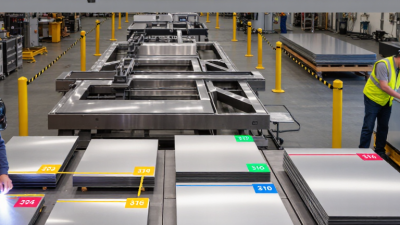
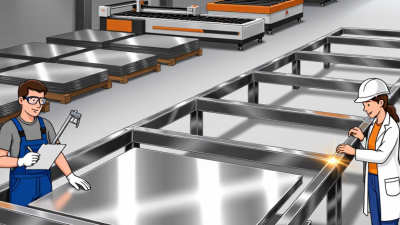
Look closely at the production floor. Are stainless sheets protected from carbon-steel contamination? Are welding areas clean and organized? Can the team control heat around thin panels? These details reveal daily discipline. They also show whether the shop can protect appearance while meeting structural requirements.
The strongest suppliers provide clear drawings, realistic lead times, inspection checkpoints, and traceable packaging. They discuss problems early. That matters.
No stainless steel fabrication shop performs perfectly on every order. Even experienced teams can miss a tolerance or underestimate polishing time. Reliable partners admit those weaknesses and correct them quickly. Buyers should review references, sample welds, and inspection practices before signing a large contract. The best sourcing decision balances technical skill, production capacity, transparent pricing, and the confidence that each finished component will perform as expected.
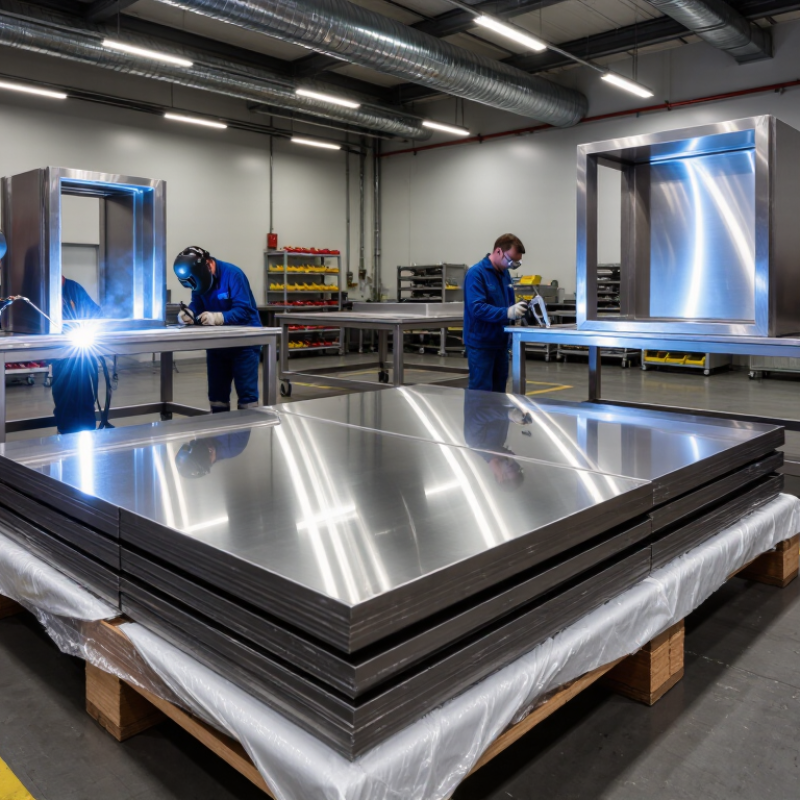
For a 2026 stainless steel fabrication shop, specify the grade and chemistry before comparing quotes. Type 304 is commonly described as 18% chromium and 8% nickel. ASTM A240/A240M lists broader composition ranges for 304 plate, sheet, and strip: 18–20% chromium and 8–10.5% nickel. These elements help the steel resist corrosion and retain useful formability. The exact chemistry matters. Ask for a material test certificate and check that its heat number matches the supplied sheets or parts. A polished surface can look reassuring, but appearance alone does not verify grade.
Fabrication details can change performance. Cutting, welding, and surface finishing may affect the finished part, especially around seams and tight corners where residue can collect. A shop should explain how it prevents material mix-ups and cleans fabricated surfaces. Nickel Institute guidance on stainless steel notes that corrosion resistance depends on both alloy composition and the service environment; salt, chemicals, and cleaning routines all matter. I would not choose 304 automatically for every job. It may be inadequate in harsher chloride exposure, so confirm the operating conditions with a qualified materials professional.
Tips: Put grade, thickness, finish, tolerances, and certificate requirements in the purchase specification. For example, state “304, 2 mm, 2B finish” rather than “stainless sheet.” Ask the shop to verify the certificate against the delivery label. Small paperwork gaps happen. Catching them early is cheaper than remaking a finished enclosure.
2026 Best Stainless Steel Fabrication Shop for Sourcing?
A reliable fabrication shop should match stainless steel to the exposure, not just the drawing. ASTM A240/A240M identifies 316 grades with about 2–3% molybdenum. That small addition improves resistance to chloride pitting and crevice attack. Think seawater spray, salt-storage rooms, and coastal processing lines. The Nickel Institute notes that 316 is often preferred for marine and chemical environments, although it is not immune to corrosion.
The difference is measurable. The common PREN formula is Cr + 3.3Mo + 16N. With molybdenum included, 316 normally offers a higher pitting-resistance value than 304. A sourcing team should request heat certificates, PMI testing, weld procedures, and passivation records. Clean welds matter. Trapped heat tint can become a corrosion starting point. So can rough grinding marks.
NACE’s IMPACT study estimated global corrosion costs near US$2.5 trillion annually, equal to roughly 3.4% of global economic output. Material selection deserves careful attention. A capable shop should discuss chloride concentration, temperature, weld exposure, and cleaning chemicals before quoting. Yet 316 is not always the best answer. Severe warm seawater may require a higher alloy. That judgment can be uncomfortable, especially when a cheaper grade looks acceptable on paper. Surface finish also needs verification, not assumption. A polished sample can hide inconsistent production quality.
| Material / Check | Typical Molybdenum Content | Corrosion-Service Fit | Fabrication Considerations | Useful Sourcing Question |
|---|---|---|---|---|
| 304 / 304L austenitic stainless steel | No intentional molybdenum addition; typically about 0% | Commonly used for general indoor, food-equipment, and atmospheric service. Less resistant to chloride pitting and crevice corrosion than 316. | Widely fabricated and welded. The low-carbon 304L grade helps reduce sensitization risk in welded sections. | Can the shop confirm the specified grade and keep 304 components separate from higher-alloy materials during handling? |
| 316 / 316L austenitic stainless steel | Typically 2–3% molybdenum | Offers better resistance than 304 to chloride pitting and crevice corrosion. Often selected for coastal or marine-adjacent equipment, but it is not immune to seawater attack. | Good general weldability. 316L's lower carbon content is commonly preferred for welded fabrications. Cleaning and removal of heat tint matter for corrosion performance. | Can the shop provide material traceability, suitable welding procedures, and post-weld cleaning or passivation when specified? |
| 2205 duplex stainless steel | Typically 3–3.5% molybdenum | Often considered for more demanding chloride environments than 316L, subject to temperature, concentration, design, and corrosion assessment. | Requires control of heat input and thermal history to preserve the intended duplex microstructure. Welding should follow qualified procedures appropriate to the application. | Does the shop have documented experience and qualified procedures for duplex stainless steel fabrication? |
| 430 ferritic stainless steel | No intentional molybdenum addition in typical 430 chemistry | Used for some indoor and mildly corrosive applications. It is generally not the first choice for chloride-rich or marine exposure. | Magnetic and formable; welding suitability depends on section thickness, joint design, and service requirements. | Is 430 appropriate for the actual exposure, and can the shop verify the required grade by documentation? |
| Material certification and traceability | Verify the grade-specific chemistry on the material test report; do not rely on appearance or a generic description. | Confirm that the supplied grade matches the project corrosion assessment and applicable specification. | Ask how heat or lot identification is preserved through cutting, forming, welding, and delivery. | Can the supplier provide the relevant material test reports and maintain traceability to finished parts? |
| Surface finish and post-fabrication care | Not applicable; molybdenum content does not replace appropriate finishing and cleaning. | Rough surfaces, embedded iron, weld scale, and crevices can undermine corrosion performance, including on 316. | Define the required finish, weld cleanup, descaling, cleaning, and passivation in the purchase specification. | Which finishing steps are included, and how are they verified against the drawing or specification? |
Selection note: Typical composition ranges are approximate and vary by product specification and applicable standard. Choose a grade using the actual chloride level, temperature, exposure, geometry, and maintenance conditions; confirm chemistry and fabrication requirements with the material certification and project specification.
When sourcing a stainless steel fabrication shop in 2026, inspect its tolerance claims carefully. A ±0.1 mm cutting tolerance requires stable machines, sharp tooling, and disciplined process control. It is not merely a number on a quotation. On a laser-cut bracket, a 0.2 mm total variation can affect hole alignment during assembly. The edge should remain clean, without heavy burrs or heat distortion. Small errors become expensive when parts are produced in volume.
A capable shop should explain how it verifies accuracy. Ask for first-article inspection records, machine calibration dates, and sample measurement reports. For forming, ±0.1 mm is more difficult because stainless steel can spring back after bending. Material thickness, grain direction, bend radius, and tooling condition all influence the result. A reliable fabricator should identify these risks before production. Not every shape can hold the same tolerance. That honesty matters.
In practical sourcing work, I would check several parts from different production batches. Use a calibrated height gauge, micrometer, or coordinate measuring machine where suitable. Compare cut dimensions, hole positions, flange heights, and bend angles. A shop may achieve ±0.1 mm on a simple flat part but miss it on a deep formed section. That difference needs documentation. I would also review packaging methods, since careless handling can bend thin stainless parts after inspection. Perfect consistency is difficult. A thoughtful supplier admits that, then shows how it controls the variation.
Assess fabrication accuracy against a ±0.1 mm cutting and forming tolerance.
This illustrative inspection sample shows each feature’s deviation from its nominal dimension. Results within the ±0.1 mm limits meet the stated tolerance; actual acceptance criteria depend on the drawing, process, and measurement method.
Choosing a stainless steel fabrication shop in 2026 means checking its quality system, not just polished sample parts. ISO’s Survey of Certifications reported more than 1.2 million valid ISO 9001 certificates worldwide in 2022. Certification alone proves little about a specific job, though. Ask for the shop’s current certificate, scope, and latest audit status. Then check whether inspection records connect to your purchase order and drawing revision.
Material control matters just as much. ASTM A240 covers chromium and chromium-nickel stainless steel plate, sheet, and strip for pressure vessels and general applications. Request mill test reports showing the grade, heat number, and applicable specification. Traceability should follow the material through cutting and fabrication; look for heat numbers transferred to parts or linked clearly in production records. The World Stainless Association reported global stainless-steel melt shop production of about 58.4 million tonnes in 2023, underscoring the scale of this supply chain. Big numbers are not a quality guarantee. Ask how the shop prevents mixed grades, and review a sample traceability packet before approving production. Even good systems can miss a handoff. Verify the details.
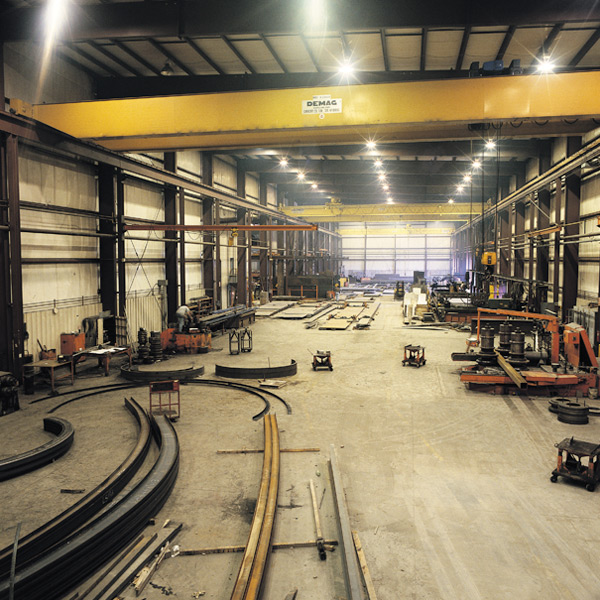
Choosing a fabrication shop requires more than checking a low unit price. Compare cutting capacity, press brake tonnage, welding equipment, and finishing space. A shop with a large laser bed may handle full sheets efficiently. However, oversized capacity does not guarantee careful workmanship.
Ask for a realistic lead time, not an optimistic promise. Request the date for drawing review, first article production, inspection, and shipment. Confirm the minimum order quantity before approving samples. A low MOQ helps with product testing, while a higher MOQ may reduce material waste and setup costs. Small details matter.
Review certifications that match your risk. ISO 9001 supports documented quality control, but it does not replace process evidence. Ask for material certificates, weld procedure records, dimensional reports, and surface-finish samples. Experienced suppliers should explain tolerances in practical terms. For example, a 0.2-millimeter edge variation may be acceptable on a bracket, but not on a fitted enclosure.
Calculate total cost beyond the quoted fabrication price. Include tooling, programming, packaging, freight, inspection, finishing, taxes, and possible rework. A shop offering the shortest lead time may charge more for overtime production. That can be reasonable for urgent orders. Still, rushed work sometimes creates avoidable defects. No supplier leads every category, and my own comparisons can miss hidden scheduling constraints. Keep that uncertainty visible when choosing.