
Choosing a steel fabrication inc is not just a price comparison. The right partner can affect fit-up, delivery, installation, and the amount of rework on site. A shop drawing may look clean on screen, but the finished beam still has to match the connection details, hole locations, and project tolerances. Small differences matter.
Quality expert W. Edwards Deming offered a useful reminder: “Quality comes not from inspection, but from improvement of the production process.” That principle applies to fabrication decisions: ask how a company controls work, not only how it checks finished parts. Can the team explain its drawing review, material traceability, welding qualifications, and inspection records? Clear answers build confidence. Vague promises do not.
This guide covers seven practical checks, from relevant project experience to communication, capacity, quality systems, and delivery planning. Look for evidence: sample documentation, realistic schedules, and answers tied to your actual scope. A low bid can be tempting. It may also leave important questions unanswered. No checklist is perfect, and one weak signal does not prove a shop is unsuitable. Still, comparing firms with the same questions makes trade-offs easier to see. The goal is not to find the biggest shop or the cheapest quote. It is to choose a fabricator that understands the drawings, flags risks early, and can support the work through completion.
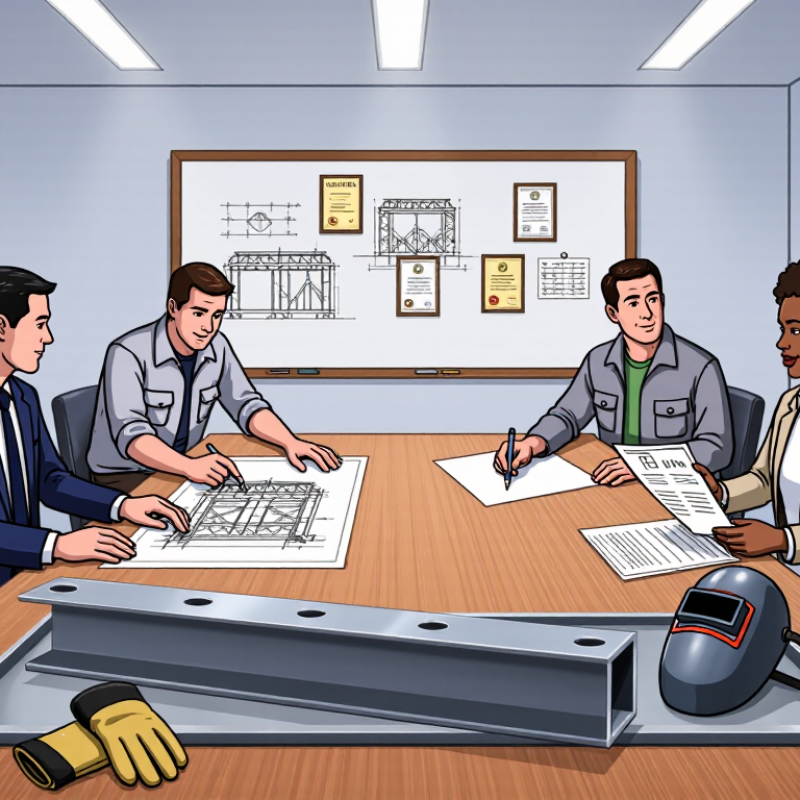
Before requesting quotes, write down what the finished part must do, where it will be installed, and how it will connect to surrounding work. Include dimensions, tolerances, quantities, delivery sequence, and any required inspection records. Name the steel grade and thickness, rather than asking for “standard steel.” World Steel Association’s World Steel in Figures 2024 reports 1,892.2 million tonnes of crude steel production worldwide in 2023. That scale does not make grades interchangeable; confirm the material certificate and traceability you need. Small details matter.
Describe cutting, forming, welding, drilling, coating, and assembly requirements, including which operations must happen in the shop. A 10-millimeter hole placed 5 millimeters off can disrupt installation. The U.S. Geological Survey’s Mineral Commodity Summaries 2025 estimates U.S. raw steel production at 79 million metric tons in 2024. Ask how a fabricator will source and verify your specified material, not just whether it can obtain steel. Share drawings, site measurements, load conditions, and finish expectations early. Even a tidy scope can miss one hole pattern. Recheck it with the installer. A clear package helps you compare bids on the same work, though the first draft will rarely catch every conflict.
Before hiring a steel fabrication company, verify that its experience matches your project, not just the general industry. Ask for examples involving similar materials, component sizes, tolerances, and installation conditions. A shop that regularly builds light frames may not be suited to heavy structural assemblies. Request project references, then ask about delivery reliability, inspection records, and how the team handled problems. Details matter. If possible, visit the workshop and observe material storage, cutting equipment, and weld inspection practices. A neat floor is useful evidence, but it does not prove consistent quality.
Check certifications and credentials directly, and confirm they cover the work you need. Ask which standards apply to the project and whether the fabricator’s welding procedures and personnel qualifications are current. Requirements can vary by material, process, and scope, so a certificate alone is not enough. Request copies and verify the issuing body, expiration date, and listed activities. Ask who reviews drawings, records measurements, and approves nonconforming parts. Some firms may have excellent credentials but limited experience with your design; that deserves a closer look. Compare the documents with the actual team and equipment assigned to your job, not only the company’s sales materials.
Assess Equipment, Production Capacity, and Customization Options
Choosing a steel fabricator takes more than comparing quotes. Ask what equipment handles your work, such as CNC cutting tables, press brakes, and welding stations. Check that machines are maintained and measuring tools are regularly calibrated. A recent equipment list is useful, but seeing a sample part can tell you more. Look for clean edges, consistent welds, and dimensions that match the drawing.
Tip: Match capacity to your schedule. Ask how many shifts the shop runs, what work is already booked, and which production step could become a bottleneck. Request a realistic delivery window, not just an ideal estimate. A busy shop may have strong equipment yet struggle to meet a tight deadline. Plans change, too; leave room for revisions if possible.
Customization matters when standard parts do not fit your design. Share drawings, material specifications, finish requirements, and critical tolerances before requesting a final price. Ask how the fabricator handles design changes and whether it can build a sample or first article for review. Compare its inspection records and experience with similar parts. A polished facility tour is reassuring, but it cannot guarantee every order will run smoothly. Ask for clear updates during production, and consider how well the team answers specific questions.
Choosing a steel fabrication company takes more than comparing prices. Review its quality controls, safety practices, and schedule discipline before approving a quote. Ask how it tracks steel heat numbers, weld inspections, drawing revisions, and nonconforming parts. Request sample inspection records, not just a polished quality statement. A neat spreadsheet can still hide gaps.
Tip 1: Check quality evidence. Look for documented inspection stages, calibrated measuring tools, qualified welding procedures, and clear sign-offs before shipment. Tip 2: Walk the shop floor. Notice whether work areas are organized, lifting gear is checked, and workers can explain the site-specific safety rules. Paper trails matter. The U.S. Bureau of Labor Statistics recorded 1,075 fatal injuries among construction and extraction workers in 2023; that figure covers occupations, not fabrication shops alone.
Tip 3: Test the timeline. Ask for a schedule showing drawing approval, material procurement, cutting, welding, coating, inspection, and delivery dates. Confirm who updates you when a drawing changes or material arrives late. McKinsey Global Institute’s 2017 construction report found that large projects typically ran 20% longer than scheduled. That is not a fabrication-shop benchmark, but it shows why vague promises deserve scrutiny. Ask for realistic milestones and recent examples of comparable work. One missed detail can shift a crane booking or leave a steel frame waiting on site.
| Tip | What to Compare | Evidence to Request | Practical Evaluation |
|---|---|---|---|
| 1. Check quality-management controls | How the fabricator controls drawing revisions, inspections, nonconformances, and corrective actions. | Quality manual or inspection plan; sample inspection and test records; current ISO 9001 certificate, if certification is claimed. | Confirm that any certificate is current and covers the relevant facility and scope. Ask how inspection requirements from your contract and drawings are documented. |
| 2. Verify welding qualifications | Whether welding procedures and personnel qualifications match the project’s materials, processes, positions, and governing code. | Applicable welding procedure specifications and supporting qualification records; welder qualification records; welding inspection reports. | For structural steel work governed by AWS D1.1, confirm that the project requirements and applicable edition are addressed. Requirements vary by material, application, and contract. |
| 3. Evaluate material traceability | Whether steel grades, heat numbers, and material records remain linked to the parts during receiving, cutting, and fabrication. | Material test reports (MTRs), purchase records, receiving logs, and a sample traceability record for a fabricated part. | Check that grade and heat-number information can be traced from the supplied material records to the relevant piece marks or parts when required by the project. |
| 4. Compare inspection and testing capability | Dimensional checks, weld inspection, coating inspection, and any required nondestructive testing (NDT). | Inspection and test plan; sample dimensional reports; inspector qualifications; NDT reports and coating records where specified. | Match inspection methods and acceptance criteria to the contract, drawings, and applicable code. NDT methods and inspection extent should be specified for the job rather than assumed. |
| 5. Review safety practices and records | Written safety procedures, employee training, hazard controls, incident reporting, and site-specific coordination. | Safety program; relevant training records; OSHA Forms 300 and 300A when applicable; recent incident-rate data and explanation of the calculation period. | Compare rates using the same period and hours-worked basis. In the United States, the OSHA incidence-rate formula commonly uses 200,000 work hours as its base; ask which cases and hours were included. |
| 6. Test the project schedule | Lead times and milestones for engineering review, material procurement, shop drawings, fabrication, finishing, inspection, and delivery. | Project-specific schedule; procurement status; milestone dates; stated assumptions, dependencies, and contingency plans. | Ask which activities control the completion date and how changes, late approvals, or long-lead materials affect the schedule. Compare schedules using the same scope and approval assumptions. |
| 7. Assess capacity, communication, and closeout | Available equipment and labor, workload during the proposed production window, response process, and document handover. | Relevant project references; a proposed communication and escalation plan; equipment or capacity overview; sample turnover package. | Confirm the proposed facility can handle the project’s largest pieces and required processes. Agree on reporting frequency and required closeout documents, such as inspection records and material certificates. |
Comparison note: Requirements depend on the project’s drawings, contract, jurisdiction, and governing codes. Request equivalent, project-specific evidence from each fabricator before comparing proposals.
When choosing a steel fabrication company, compare more than the final price. Ask for an itemized estimate covering materials, cutting, welding, finishing, delivery, and installation. A low quote may exclude important work. Check whether the steel grade, thickness, and tolerances match your drawings. Small differences can affect fit on site. Ask what could change the price, and how changes will be approved. The answer should be specific, not just “it depends.” Pricing is rarely simple.
Communication matters just as much. Notice how quickly the company answers questions and whether it flags unclear measurements before production. Ask for references from projects with similar materials, dimensions, or deadlines. A brief call with a past client can reveal whether updates were reliable and problems were handled directly. Then read the contract closely. It should state the scope, payment schedule, delivery dates, inspection process, and responsibility for revisions. Confirm how defects or delays will be addressed, too. This part is easy to skim. Don’t. Even a well-written agreement can miss a practical detail, so compare it with your drawings and ask about anything that feels vague before signing.
Suggested evaluation weighting for comparing fabricators (%)
Use these suggested weights as a starting point when comparing bids: prioritize clear pricing, responsive communication, and fair contract terms, while also checking references, relevant experience, quality controls, and production capacity. The percentages are an illustrative buyer’s rubric, not survey results.