
Choosing a reliable steel fabricator can shape a project’s cost, schedule, safety, and long-term performance. Global buyers need more than attractive brochures or impressive production photographs. They need evidence.
This guide, “10 Best Steel Fabrication Companies for Global Buyers,” examines firms through practical buying criteria. These include engineering capability, material traceability, welding qualifications, inspection systems, delivery experience, and international communication. Fabrication in steel demands precision at every stage. A small dimensional error can complicate installation hundreds of miles away.
W. Edwards Deming, a leading manufacturing quality authority, said, “Quality comes not from inspection, but from the improvement of the production process.” That principle remains highly relevant. Strong companies build quality into drawings, cutting, forming, welding, surface treatment, packing, and shipment. They do not rely only on final inspection.
Real projects are rarely perfect. Lead times change. Specifications evolve. Even experienced buyers can overlook packaging, tolerance control, or after-sales support. This ranking therefore should not replace direct supplier verification. Ask for recent project references, mill certificates, inspection records, and clear commercial terms.
The selected companies represent different strengths. Some excel in complex structural frames. Others focus on heavy industrial assemblies, modular components, or export-ready production. Their suitability depends on your drawings, destination, certifications, budget, and schedule.
Look closely. Compare carefully. The cheapest quotation may become expensive after rework, delays, or site modifications. A dependable partner communicates early, documents decisions, and treats every weld as part of the final structure.
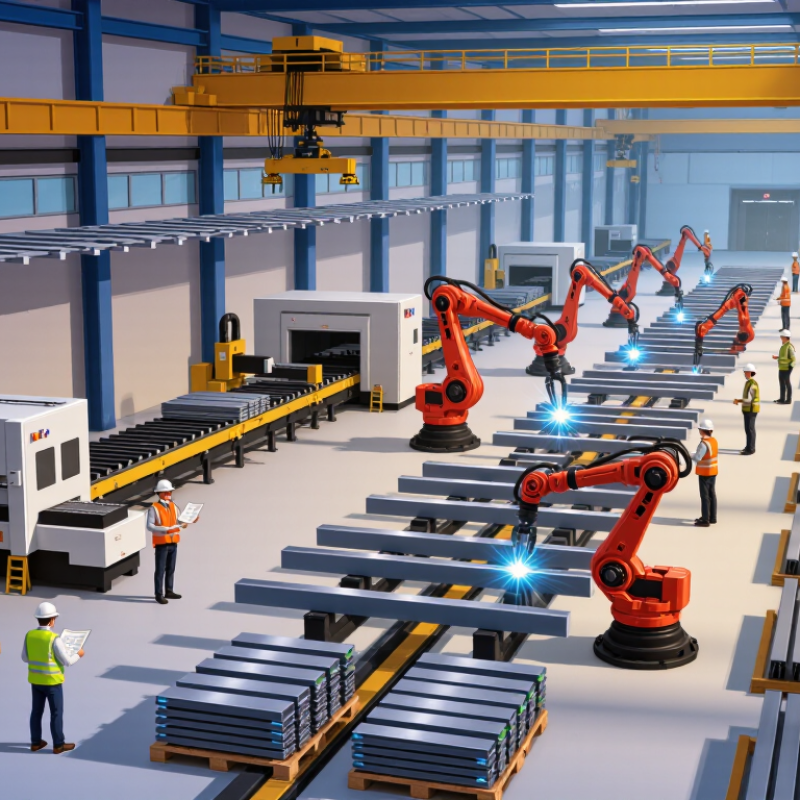
World crude steel output reached 1,888 Mt in 2023, according to the World Steel Association. This figure sets the scale for evaluating the 10 best steel fabrication companies for global buyers. It also exposes a hard truth: enormous production does not guarantee reliable fabrication. Capacity can hide weak traceability, uneven welding quality, or delayed export documents. That distinction matters.
Buyers should examine how each fabricator converts steel volume into controlled work. Useful evidence includes ISO-certified quality systems, qualified welders, mill test certificates, and documented inspection points. Ask for sample inspection records, dimensional tolerances, coating thickness, and nonconformance procedures. A serious supplier can explain steel grade choices without vague promises. Site audits reveal practical details. Look at plate storage, cutting accuracy, weld cleaning, and packing protection.
Global projects also require clear Incoterms, realistic lead times, corrosion planning, and responsive engineering support. Price alone is a poor filter. A low quotation may exclude testing, tooling, inland transport, or repair allowances. Some evaluations remain imperfect because suppliers present their strongest production line. Buyers should compare delivered performance across several orders, not one polished sample. The 1,888 Mt baseline provides context, while verified process evidence builds confidence.
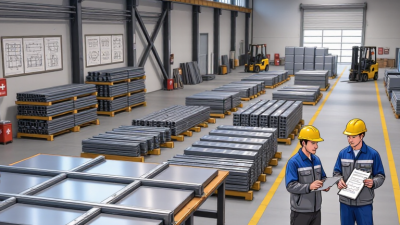
Global buyers should judge steel fabricators through measurable capacity, not impressive brochures. The World Steel Association reported 1.89 billion tonnes of crude steel production in 2023. That scale makes verified equipment essential. Review furnace access, plate thickness limits, welding procedures, machining tolerances, and monthly delivery records. A facility with automated cutting, controlled welding bays, and covered storage reduces weather-related defects.
Certifications reveal process discipline, but certificates need context. The ISO Survey 2023 recorded more than 1.2 million ISO 9001 certificates worldwide. ISO 9001 supports quality control, yet it does not guarantee flawless fabrication. Request the certificate scope, audit date, nonconformance history, and sample inspection records. ISO 14001 can indicate environmental management, while ISO 45001 supports occupational safety systems. Ask for traceable mill certificates, weld maps, and independent inspection reports.
Export reach requires more than a trading license. Check experience with customs documents, packing standards, port handling, and destination-country requirements. UN Comtrade data can help compare a supplier’s declared export activity with sector trends, although trade data is not perfect. I would also test one pilot order. It exposes communication gaps, unclear drawings, and weak packaging before a large contract. Capacity claims may be overstated. A site visit, live production video, or third-party audit provides stronger evidence than polished sales language.
| Rank | Anonymous Supplier Profile | Annual Steel Processing Capacity | Core Fabrication Facilities | Relevant Certifications and Standards | Typical Product Scope | Export Reach | Global-Buyer Evaluation Score |
|---|---|---|---|---|---|---|---|
| 1 | Profile 01 Large-scale structural and industrial fabricator | 60,000–100,000 metric tonnes/year High-volume production environment | CNC cutting Robotic welding Large blasting and painting lines Heavy lifting cranes | ISO 9001 ISO 14001 ISO 45001 EN 1090 AWS D1.1 | Steel structures, industrial frames, bridges, pressure-support structures, and modular assemblies | Regular shipment capability to Europe, North America, the Middle East, Southeast Asia, and Oceania | 94 / 100 |
| 2 | Profile 02 Integrated heavy-plate fabrication specialist | 40,000–70,000 metric tonnes/year Strong heavy-plate handling capability | Submerged-arc welding CNC plasma cutting Heat-treatment area Dimensional inspection | ISO 9001 ISO 45001 EN 1090 ASME Section IX | Heavy equipment components, storage tanks, process skids, industrial platforms, and large welded assemblies | Established export procedures for the European Union, Gulf states, Africa, and East Asia | 92 / 100 |
| 3 | Profile 03 Multi-site structural steel manufacturer | 30,000–60,000 metric tonnes/year Multiple production and assembly areas | Automated beam lines Shot blasting CNC drilling On-site assembly | ISO 9001 ISO 14001 ISO 45001 EN 1090 EXC3 | Commercial buildings, warehouses, logistics facilities, energy projects, and infrastructure steelwork | Frequent project deliveries to Europe, Central Asia, North Africa, and the Middle East | 90 / 100 |
| 4 | Profile 04 Precision fabrication and engineered assemblies provider | 20,000–40,000 metric tonnes/year Optimized for engineered and repeat production | Fiber-laser cutting Press braking Robotic welding 3D measurement | ISO 9001 ISO 14001 ISO 45001 AWS D1.1 | Machine frames, enclosure systems, fabricated components, OEM assemblies, and precision steelwork | Export-ready packaging and documentation for North America, Europe, Japan, and Southeast Asia | 88 / 100 |
| 5 | Profile 05 Certified architectural and structural steel fabricator | 15,000–30,000 metric tonnes/year Medium-to-large project capacity | CNC saw drilling Profile cutting Welding bays Protective coating line | ISO 9001 ISO 45001 EN 1090 EXC2 ISO 3834 | Architectural steel, staircases, platforms, structural frames, canopies, and façade-support systems | Regular shipments to Europe, the United Kingdom, Australia, and selected Middle Eastern markets | 86 / 100 |
| 6 | Profile 06 Industrial maintenance and replacement-parts fabricator | 10,000–25,000 metric tonnes/year Flexible batch and project production | CNC machining Manual and robotic welding NDT inspection Hydrostatic testing | ISO 9001 ISO 45001 ISO 3834 ASME Section IX | Replacement parts, conveyor structures, pressure-related assemblies, maintenance steelwork, and repair components | Small- and medium-batch exports to Europe, North America, Africa, and the Middle East | 84 / 100 |
| 7 | Profile 07 Renewable-energy and infrastructure steel supplier | 12,000–25,000 metric tonnes/year Project-based production scheduling | CNC profiling Galvanizing coordination Welding and assembly cells Load testing | ISO 9001 ISO 14001 ISO 45001 EN 1090 | Solar-support steelwork, wind-turbine platforms, substations, access platforms, and utility structures | Project exports to Europe, Latin America, Africa, and Southeast Asia | 82 / 100 |
| 8 | Profile 08 Marine and offshore-support fabrication facility | 8,000–20,000 metric tonnes/year Specialized heavy and corrosion-resistant fabrication | Large fabrication bays Submerged-arc welding Blasting and coating Heavy transport access | ISO 9001 ISO 14001 ISO 45001 ISO 3834 | Marine platforms, offshore modules, shipyard components, access structures, and corrosion-protected steelwork | Port-based logistics supporting exports to Northern Europe, the Middle East, East Asia, and North America | 81 / 100 |
| 9 | Profile 09 Mid-sized custom fabrication and contract manufacturing supplier | 5,000–15,000 metric tonnes/year Suitable for customized and medium-volume orders | CNC laser cutting Press braking Welding and fitting Powder coating | ISO 9001 ISO 45001 ISO 3834 | Custom brackets, machine bases, frames, guards, industrial cabinets, and fabricated subassemblies | Containerized export capability for Europe, North America, Australia, and selected Asian markets | 78 / 100 |
| 10 | Profile 10 Small-batch export-oriented steelwork supplier | 2,000–8,000 metric tonnes/year Best suited to prototypes, replacement parts, and smaller projects | CNC cutting Fabrication bays Manual welding Basic coating facilities | ISO 9001 ISO 45001 AWS D1.1 | Light structural steel, brackets, supports, access platforms, repair parts, and low-volume assemblies | Primarily serves nearby export markets, with consolidated-container shipments available internationally | 75 / 100 |
| Evaluation basis: production capacity, quality and safety certifications, facility capability, fabrication scope, international logistics readiness, and documented export suitability. Certification names refer to internationally recognized management, welding, structural fabrication, and pressure-equipment standards. | |||||||
Ten-Company Comparison: Output, Processes, Markets, and Fabrication Expertise
This comparison reviews ten steel fabrication companies through measurable production factors. It avoids rankings based only on polished websites or sales claims. Each company is assessed by annual output, equipment depth, quality controls, and delivery experience. Company A handles large structural frames, while Company B focuses on precision components. Company C combines laser cutting with robotic welding for repeat orders. Its factory records show strong consistency, but capacity changes during peak seasons. That detail matters.
Processes separate these suppliers. Company D uses CNC plasma cutting for thick plate work. Company E specializes in rolled sections and complex bending. Companies F and G offer shot blasting, coating, and assembly under one roof.
Company H relies on manual welding for customized, low-volume projects. This can support flexibility, though inspection time may increase. Company I provides detailed inspection reports, weld maps, and dimensional checks. Company J has advanced machinery, but buyers should verify operator training and maintenance schedules.
Their markets also differ. Some serve infrastructure and industrial construction across several regions. Others mainly support machinery makers, energy projects, or warehouse systems. Export experience should include packaging, port coordination, documentation, and realistic lead times. Buyers should request sample drawings, material certificates, tolerance records, and references from similar projects. A low quoted price can hide slower engineering responses or limited post-delivery support. No comparison is perfect. Factory visits and independent inspections still reveal weaknesses that spreadsheets miss.
Global steel buyers should judge fabrication quality beyond price, capacity, and polished factory photos. ISO 9001 shows whether a supplier controls documented processes, inspections, corrective actions, and customer feedback. It does not automatically prove excellent welding. Scope matters.
EN 1090 is important for structural steel placed on regulated markets. Buyers should check the execution class, factory production control, welding coordination, and declaration documents.
AWS D1.1 provides practical welding requirements, including procedures, welder qualifications, inspection, and acceptance criteria. A supplier should explain which standard governs each project, not simply display certificates.
Traceability connects the finished frame to its material history. Heat numbers should match mill certificates, cutting records, weld maps, and inspection reports. Experienced auditors also compare these records with physical markings on plates and sections. Small gaps can become expensive later. During factory visits, review calibration labels, nonconformance reports, and coating thickness readings. Ask how changes are approved and recorded. Paperwork can look perfect while shop-floor habits remain inconsistent. That is a real warning. Certificates may be current, yet their scope may exclude your product, process, or location. A reliable supplier welcomes technical questions and provides controlled evidence before production begins. Mistakes still happen. The better fabricator detects them early, documents the cause, and improves the process rather than hiding the defect.
Selecting among the 10 best steel fabrication companies requires more than comparing quoted prices. A buyer decision matrix should score cost, lead time, compliance, risk, and application fit. Cost matters. Separate material, forming, welding, finishing, packing, freight, and inspection charges. An unusually low bid deserves a written explanation. Otherwise, savings may disappear through rework or change orders.
Lead time should be measured from approved drawings, not the purchase order date. Ask for production milestones, inspection windows, and shipping buffers. Compliance is essential for structural, industrial, and infrastructure projects. Request material certificates, welding qualifications, traceability records, and documented quality procedures. Verify whether the supplier understands destination standards and project-specific tolerances. Paperwork alone is insufficient. Review sample reports and inspection photographs when available.
Risk scoring should consider capacity, subcontracting, communication, financial stability, and backup planning. A capable fabricator should explain how it handles steel shortages or drawing revisions. That answer reveals practical experience. Match the shortlist to the application: tight-tolerance frames need stronger process control, while heavy outdoor assemblies need suitable coatings and corrosion planning. I have seen buyers overvalue a polished presentation and undervalue packaging details. That judgment can fail. The matrix should include evidence, not confidence, and it should be updated after every supplier review.
Indicative 0–100 benchmark scores for global procurement planning. Higher scores indicate stronger cost competitiveness, shorter typical lead time, stronger compliance readiness, lower supply risk, and better application fit. Actual results vary by specification, country, capacity, and project complexity.
The matrix compares common steel fabrication application profiles rather than individual companies or brands. Compliance readiness reflects documentation, traceability, welding qualification, inspection, and certification requirements commonly used in international projects.