What Are Steel Fabrication Standards?
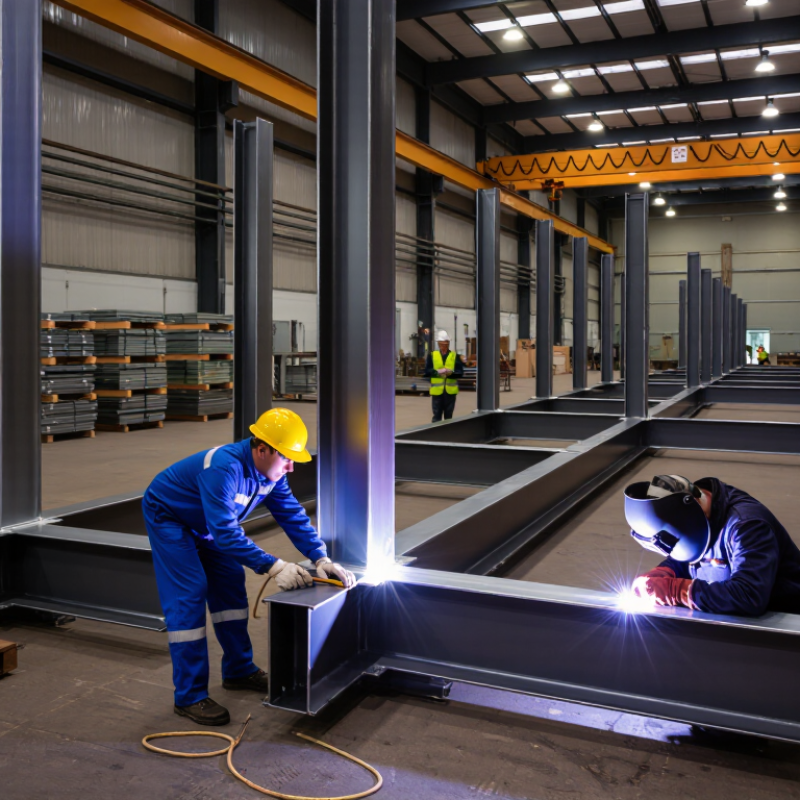
Steel fabrication standards define how drawings become dependable steel components. They set expectations for materials, welding, dimensional tolerances, inspection, documentation, and erection. Their details matter on the shop floor: a welder checks a joint, an inspector records a measurement, and a fabricator verifies a beam’s camber before shipment. Clear requirements help teams catch mismatches before steel reaches the site.
A useful paraphrase of AISC structural engineer Charles J. Carter’s standards-focused guidance is: “Clear requirements connect design intent with reliable fabrication and erection.” This is a paraphrase, not a verified verbatim quotation. The distinction matters. Standards may come from organizations such as AISC, AWS, or ISO, and the applicable requirements depend on the project documents and jurisdiction. They are not interchangeable checklists. A welding procedure, for example, addresses different concerns from a mill certificate or an inspection record.
This guide explains what steel fabrication standards cover, who develops them, and how project teams apply them. It also considers drawings, quality control, welding, traceability, and common compliance challenges. A standard cannot fix every unclear drawing. People still need to ask questions, record decisions, and review details carefully. Sometimes a small note changes everything. Reading the requirements early can prevent avoidable rework, but it does not replace competent engineering judgment.
What Steel Fabrication Standards Define and Why They Matter
What Are Steel Fabrication Standards?
Steel fabrication standards define how steel components are specified, made, inspected, and documented. They may cover material grades, welding procedures, dimensional tolerances, surface preparation, and testing. The exact requirements depend on the project, jurisdiction, and governing documents. Details matter. A beam that looks straight may still fall outside its specified tolerance.
These standards help owners, engineers, fabricators, and inspectors work from shared criteria. Clear requirements can reduce rework, improve consistency, and make inspection results easier to verify. They also support traceability, such as linking material certificates to a particular batch. A tidy weld is not proof that every requirement has been met. Compliance alone cannot resolve a poorly chosen design or unclear drawing, either. Human judgment still matters, and requirements should be checked against the project specifications.
Tips: Confirm the applicable standard and its edition before fabrication begins. Keep approved drawings, inspection records, and material documentation together. Ask for clarification when a tolerance or weld detail is ambiguous; guessing can create costly repairs.
Who Develops and Maintains Fabrication Standards
Steel fabrication standards are developed by consensus committees, not by a single regulator.
These groups bring together fabricators, engineers, inspectors, material suppliers, and users to agree on practical requirements. International standards are coordinated by the International Organization for Standardization (ISO), whose 2023 annual report describes a portfolio of more than 25,000 standards and a membership of 170 national bodies. That breadth matters: a rule written for structural steel may not address weld inspection or pressure equipment.
Specialist organizations maintain standards within their fields. The American Welding Society (AWS) reports a portfolio of more than 350 welding codes, specifications, and guides. The American Society of Mechanical Engineers (ASME) develops codes covering pressure equipment, while the American Institute of Steel Construction (AISC) publishes standards for structural steel buildings. Their technical committees review proposed changes, consider public comments, and issue revised editions.
A shop may notice the change first as a new weld acceptance limit or a different inspection record.
Maintenance is ongoing, but updates do not automatically become law. Owners, engineers, or authorities may specify which edition applies to a project. ISO’s 2023 annual report and AWS’s standards program show the scale of this work; they do not make every standard interchangeable. That boundary is easy to overlook. Fabricators should check the contract edition, material requirements, and inspection criteria before cutting steel. Even experienced teams can miss a revision when drawings and shop procedures are updated at different times.
Which Materials, Processes, and Quality Controls Standards Cover
Steel fabrication standards govern three decisions: materials, production methods, and verification. Specifications such as ASTM A36 and A572 define strength and other requirements for structural steel. ASTM A6/A6M covers dimensions and tolerances for plates and shapes. Mill certificates link heat numbers to the material delivered. Small details matter.
Process standards depend on the product. AWS D1.1 covers structural steel welding, including procedure and welder qualifications, fit-up, and inspection. ISO 3834 sets quality requirements for fusion welding, with controls for drawings, consumables, equipment, and records. Project specifications may add requirements for cutting, forming, and bolting. One code rarely covers the whole job.
Quality control makes requirements verifiable: check grade and thickness on receipt, preserve material identification, measure cut parts, and inspect welds using specified methods. The ISO Survey 2022 reported 1,265,216 valid ISO 9001 certificates worldwide. That figure reflects quality-system adoption, not proof that any individual weld is sound. Not quite. Inspection records should follow each part through production; rushed traceability can leave gaps, even when a finished seam looks clean.
How Standards Guide Each Stage of Steel Fabrication
Steel fabrication standards guide work from the first material check to final dispatch. They turn drawings into measurable requirements for dimensions, traceability, weld quality, and corrosion protection. The World Steel Association’s World Steel in Figures 2024 reports 1,892.2 million tonnes of crude steel production in 2023, highlighting the scale of material moving through global supply chains.
Scale matters.
At receiving, teams compare mill certificates, grade markings, and heat numbers against project specifications. During detailing, EN 1090 execution requirements help define tolerances, documentation, and execution classes. Cutting and fit-up checks catch misplaced holes or edge defects before parts reach welding. For welded joints, ISO 3834 sets quality requirements, while qualified procedures and inspectors verify preheat, weld size, and visual acceptance.
Small mismatches can multiply later.
After welding, dimensional inspection checks alignment, camber, and connection fit. Coating specifications control surface preparation, film thickness, and curing conditions. Records preserve a traceable path from raw plate to installed member. The sequence is not always tidy: a drawing revision can reach the shop floor after a checklist has been printed.
That gap deserves attention.
How Compliance Is Verified Through Inspection and Records
Steel fabrication compliance is verified through inspections and records, not a certificate alone.
The project specification and applicable standards define what must be checked. Inspectors may review material certificates, shop drawings, weld procedures, and worker qualifications before fabrication begins. They also measure member lengths, hole locations, plate thicknesses, and assembly alignment.
Small gaps matter.
Welds are examined visually for issues such as cracks, undercut, or incomplete fusion. Where the project requires it, non-destructive testing can reveal defects that surface checks may miss. Inspection reports should identify the part, inspection method, date, and result. Material markings and traceability records help connect each steel component to its documentation. If work fails an acceptance criterion, the repair and reinspection should be recorded. A tidy folder is useful, but it cannot prove that every check was performed correctly.
Tips:
Keep inspection records current, legible, and linked to specific components. Note who performed each check and which acceptance criteria applied. No inspection plan catches everything; teams should review recurring defects and adjust checks where evidence suggests a weak spot. That reflection is easy to skip under schedule pressure.